|
|
Bioastronautics Research Group (2002-2019 archived) NOTE:
As of January 2020, the content of this webpage has been migrated to:
https://www.colorado.edu/bioastronautics/students
…new building, new era! |
|
This specialty
area of Aerospace Engineering Sciences encompasses biological, behavioral and
medical aspects governing humans and other living organisms in a space flight
environment; and includes design of payloads, spacesuits, spacecraft habitats
and life support systems. In short, Bioastronautics spans
the study and support
of life in space. |
|
Current Bioastronautics Research
Students (as of
January 2020)
|
Mike Lotto, PhD candidate |
In situ Resource Utilization for Spacecraft
Atmosphere Revitalization Mike Lotto completed his concurrent Bachelor's and Master's Degrees in Aerospace Engineering Sciences at the University of Colorado-Boulder in May of 2015. For his doctoral research, he is assessing the feasibility of using co-electrolysis with room temperature ionic liquids to produce methane and oxygen for Mars in-situ resource utilization. During his undergraduate career, Mike was a co-op at NASA Johnson Space Center, where he primarily worked in the Mission Operations Directorate in support of the International Space Station program. He also interned with the Dream Chaser development team at Sierra Nevada Corporation. Under the guidance of Dr. Klaus, he was lucky enough to propose and conduct research on NASA’s “Weightless Wonder,” characterizing free convection in reduced gravity environments. After his Master's, he worked for a year as a Graduate Research Assistant for BioServe Space Technologies, where he developed biotech payloads for research on the International Space Station. In his spare time, Mike enjoys backpacking, photography, and running. He is also a PADI-certified Rescue Diver, a B-licensed skydiver, and a licensed amateur radio operator. PhD Thesis
Advisor: Dr. David Klaus Funding:
NASA STTR Freezable Heat Exchanger 2015; BioServe Space Technologies, 2015-16;
NSTRF 2016-20 last updated
January 2018 |
|
Daniel Case, PhD candidate |
Integrated Space Radiation Shielding for Extraterrestrial
Habitats Daniel Case is a PhD student in aerospace engineering sciences
at the University of Colorado - Boulder.
At CU, he researches strategies for mitigating space radiation
exposure, hoping to help enable long-term human spaceflight beyond low Earth
orbit. In 2016, Daniel was awarded a
NASA Space Technology Research Fellowship (NSTRF) to facilitate his research,
titled Passive Radiation Shielding:
Integrating Multilayer and Multipurpose Materials into Space Habitat Design.
Daniel earned his M.S. in aerospace engineering sciences from CU –Boulder in
May 2016, and he earned his B.A. in physics and philosophy from Northwestern
University in June 2011. In the time between his undergraduate and graduate
studies, Daniel worked as a business analyst for a financial firm in Chicago,
Illinois. In his free time, Daniel likes to play sports, including basketball,
bowling, and golf. He’s also an avid
reader, although the list of books that he’d like to read grows more quickly
than the list of books that he’s actually read. His philosophical interests include ethics,
metaphysics, and existentialism, and he likes to muse about the ways in which
philosophy influences public policy. Ph.D. Thesis Advisor: Dr.
James Nabity Funding: College of
Engineering and Applied Sciences Dean’s Fellowship (2014-2015), Aerospace
Engineering Sciences Department (2014-2016), NSTRF (2016-Present) last updated
August 2016 |
|
Christine Escobar (née
Chamberlain), PhD student |
Robust
ECLSS Design for Deep Space Exploration Christine
received her Bachelor’s Degree in Environmental Sciences, with a focus in ecology,
from the University of Virginia in 2000. She then received her Master’s
Degree in Systems Engineering, also from the University of Virginia, in
2002. Christine has since held various positions specializing in
statistical data analysis before joining the NASA Sounding Rocket Operations
Contract (NSROC) as a Flight Performance Analyst in 2008. From 2010 –
2014, she worked for Orbital Science Corporation, as a Systems Engineer and
then Mission Manager, managing engineering teams and launch operations for
several NASA sounding rocket missions. While with Orbital, Christine became a
certified Project Management Professional (PMP). She then left the
Sounding Rocket Program in 2014 to return to graduate school at CU Boulder
and pursue her PhD in bioastronautics. She served as Systems Engineer for
design and fabrication of the Mars OASIS crop production system, as part of
the 2014 eXploration Habitat
(X-Hab) Academic
Innovation Challenge. She received an MS in Aerospace Engineering
Sciences from CU Boulder with an emphasis in Bioastronautics in 2016.
Currently, her PhD research involves the robust design of environmental
control and life support systems (ECLSS). Christine is also co-owner of a
small aerospace engineering and technology development company, called Space
Lab Technologies, LLC. In her spare time, she is an avid musician (flute,
drums, and voice) and enjoys hiking and biking in the Colorado Rocky
Mountains. PhD
Advisor: Dr. James Nabity Funding:
CU Boulder Aerospace Engineering Sciences (AES) Graduate Fellowship, 2013;
FAA Center of Excellence for Commercial Space Transportation, 2014; NASA
NextSTEP with Orbital ATK, 2015-16 last updated
September 2017 |
|
Kipp Larson, PhD student |
Spacesuit Thermal Control System Kipp earned a B.S.
degree in Physics and Philosophy with a minor in Astrophysics from
Renssellaer Polytechnic Institute. He later went on to earn a M.S. degree in
Electrical Engineering from the University of New Hampshire where he
developed the front-end electronics for a gamma-ray imaging spectrometer
instrument prototype. After working as a professional ski instructor while at
UNH, he went to work for Lockheed Martin at NASA Johnson Space Center in
Houston as the lead systems engineer and crew trainer for the Human Research
Facility instrument rack on the International Space Station. After moving to
Boulder to work at Ball Aerospace as the mission operations lead for the NPP
and Worldview spacecraft, he earned an M.S. degree in Space Systems
Operations Management from Webster University. He later served a brief stint
as an adjunct professor at Webster University, where he taught a graduate
class in satellite communication, and he also served as an assistant instructor
for Johns Hopkins University’s M.S. program in Systems Engineering at Ball.
He is currently the Mission Operations Manager (MOM) leading the team that
runs NASA’s Kepler/K2 space telescope, which has discovered over 5,000
planets outside our solar system, including the first Earth-sized planets in
the habitable zone of their stars. In 2015 he began
pursuing a Ph.D. in Aerospace Engineering at the University of Colorado at
Boulder focusing in bioastronautics. His current area of research is the use
of thermoelectric generators to create power using body heat as part of a
space suit thermal control system. He is a senior member of the American
Institute of Aeronautics and Astronautics (AIAA), a member of the Aircraft
Owners and Pilots Association (AOPA), the Experimental Aircraft Association
(EAA) and the Delta Mu Delta Academic Honor Society. In his spare time he
enjoys hiking, skiing and wishing he could scuba dive more. A private pilot,
he is also building an airplane in his garage. Ph.D. Thesis Advisor: Dr. James Nabity last updated December 2016 |
|
Young-Young Shen, PhD
student |
Spacesuit Wearer Joint Kinematics Estimation Young-Young's
PhD research seeks to develop a magnetometer-free wearable inertial
sensor system for observing human motion inside a spacesuit. His work is
motivated by the need for in-suit measurements of wearer joint kinematics in
order to inform the design of spacesuits. This enables the development of
spacesuits that more adequately accommodate the wearer, which will be
necessary for preventing astronaut musculoskeletal injuries during highly
frequent EVAs on future crewed planetary missions. His research interests
include mathematical modeling, state estimation, and dynamics and
control. Separately, for an independent study,
Young-Young worked to develop a particle filter model of
human orientation perception under the influence of visual and
vestibular cues. He previously held a research assistantship with
the CU Integrated Remote and In-Situ Sensing initiative, for which he
studied applications of unmanned aircraft systems in subalpine
forest ecology. Young-Young received his Master of Applied Science in aerospace
engineering from the University of Toronto in 2015, where he
participated in the analysis, development, and testing of attitude
determination and control systems for next-generation microsatellites. He
completed his undergraduate studies in the Engineering Science program at the
University of Toronto, where he majored in aerospace engineering, receiving
his Bachelor of Applied Science in Engineering Science in 2013. In his
spare time, Young-Young enjoys working on his personal software
projects, playing the violin in the CU Campus Orchestra, and skiing. He is
also a NAUI-certified Scuba Diver. PhD Thesis Advisor: Dr. Allison Anderson Funding: Department of Aerospace Engineering Sciences (2017 to
present), NASA Quantifying and Preventing EVA Injury in Exploration
Environments Grant NNX17AB11G (2017), CU Integrated Remote and In-Situ
Sensing (IRISS) initiative (2016) last updated August 2019 |
|
Kathrine Bretl, PhD student |
Artificial Gravity Katie is a first year PhD
student Aerospace Engineering Sciences with an emphasis in
Bioastronautics. She received her B.S. in Aerospace Engineering with a
minor in Political Science from MIT in February of 2016. In her time at MIT,
she completed several semesters of research in various areas including
embryonic stem cells, concussion mitigation, supersonic aircraft pressure
signature propagation, and most recently, spacesuit design. She has
interned at NASA Langley Research Center, NASA Johnson Space Center, and
SpaceX. Passionate about human space exploration, Katie plans to
investigate artificial gravity and enabling technologies in her time here at
CU. A Wisconsin native, Katie is an avid sports fan (go Buffs!) and loves
flying, camping, drinking craft brews, and spending time with her friends and
family. Ph.D. Thesis
Advisor: Dr. Torin Clark Funding: NSTRF
(2017-2021) last updated
December 2016 |
|
Jordan Dixon, PhD student |
Jordan Dixon received
his Bachelor’s Degree in Aerospace Engineering (August 2016) from the
University of Kansas including a final semester at Delft University of
Technology. His undergrad research included design, manufacturing and
assembly of composite structures to house radar systems and facilitate
desirable radiation patterns, studying effects of bias-adaptive haptic feedback
in the automotive domain, and determining efficacy of pilots with peripheral
and/or physical motion cues during tracking tasks. He also completed an
internship with the Center for Remote Sensing of Ice Sheets (CReSIS) as part
of the flight test team, where his work involved redesigning, modifying, and
flight testing a medium-size UAV that recently sounded Greenland’s Russel
Glacier. Jordan is now a first
year PhD student in Aerospace Engineering Sciences at the University of
Colorado with an emphasis in Bioastronautics. His current area of research is
spaceflight-induced physiological adaptation and corresponding mitigation
strategies. He plans to continue investigating this area with a focus in
dynamic computational modeling of physiological systems. Outside of school,
he enjoys playing sports including ultimate frisbee and hockey, playing music
with friends, and exploring Boulder’s world of craft beer. Ph.D. Thesis
Advisor: Dr. Torin Clark Funding: CU SEED grant
(2017-2018) last updated
January 2017 |
|
Katya Arquilla, PhD student |
Wearable sensor systems Katya
Arquilla earned her Bachelor of Science in Astrophysics at Rice University in
Houston, TX in May 2014. During her time at Rice, her research
focused on the detection of exoplanets through the use of stellar
spectroscopy working with Professor Christopher Johns-Krull. After
graduating in 2014, Katya taught math and physics to middle and high school
students in Houston, earning her teaching certification during her first
year. In Fall 2016, Katya began a Master’s degree in Aerospace
Engineering Sciences with a focus in Bioastronautics. During the
2016-2017 academic year, she participated in the X-Hab graduate project
titled Cabin Atmosphere Revitalization through Ionic Liquids (CARIL) as
Project Manager. She also worked as a teaching assistant for the
undergraduate aerospace courses Thermodynamics/Aerodynamics and Attitude
Dynamics/Orbital Mechanics. Katya’s
current research focus is in wearable sensor systems, working with Professor
Allison Anderson and fellow PhD students Young-Young Shen and Abhishektha
Boppana on a wearable pressure and motion sensing garment for use within the
space suit to work toward injury prevention during extravehicular
activity. In May 2018, Katya received her Master’s degree, and
this fall she will begin her PhD thesis research on the use of wearable
sensor systems to discern physiological signals indicative of mental
illnesses such as PTSD and depression.
This research will be performed in conjunction with a group of
researchers in the Biomedical Solutions capability at The Charles Stark
Draper Laboratory (Cambridge, MA). In her free time, Katya enjoys being
outside hiking, mountain biking, snowboarding, playing
ultimate frisbee and enjoying all the perks of life in Boulder. Ph.D. Thesis Advisor:
Dr. Allison Anderson Funding: Draper
Fellowship (2018-present) last updated August 2018 |
|
Abhishektha Boppana, PhD
student |
Abhishektha (Abhi)
graduated from Case Western Reserve University (CWRU) in May 2017 with a BS
in Biomedical Engineering. During his undergraduate career, he completed
internships at both NASA’s Glenn Research Center (GRC) and NASA’s Johnson
Space Center (JSC). His work at GRC focused on developing finite
element-based bone models to study the effect of performing exercise in
microgravity. At JSC, he worked on a variety of projects including:
validating the use of photogrammetry in spacesuit sizing, parametrically
modeling shoulder deformation, and studying spacesuit contact pressure during
shoulder movements. Abhi is currently a
PhD student in Aerospace Engineering Sciences at the University of Colorado,
an emphasis in Bioastronautics. For his doctoral research, Abhi is exploring
a new methodolgy to design spacesuit footwear using information about
shape changes in the foot. This work is motivated by the need to have safer,
more comfortable footwear for human spaceflight missions to the Moon and Mars
where astronauts will need to walk for long distances to complete their
missions. To design better fitting footwear, Abhi is collecting scans of the
foot during walking trials, and using the data to predict changes in foot
shape through the gait cycle. This data will then be used to design new
spacesuit footwear that matches the dynamic shape of the foot. Outside of academics,
Abhi enjoys travelling, eating, and photography. last updated September 2019 Ph.D.
Advisor: Dr. Allison Anderson Funding: Smead Scholar (2017-present), NSF GRFP Fellowship
(2018-present) last updated
Nov 2019 |
|
Carlos Pinedo, PhD student |
Carlos is a Major and a
test pilot in the United States Air Force and current PhD student in
Aerospace Engineering Sciences with a focus in Bioastronautics. He received
his B.S and M.S. in Aeronautics and Astronautics from MIT in 2005. During his time at MIT he completed
internships and fellowships at NASA Armstrong, NASA Langley, and Caltech. His undergraduate research culminated in a
thesis studying the aerodynamic benefits of unmanned aerial vehicle formation
flying. While his M.S. thesis focused
on the effects of a combined 3D auditory/visual cueing system on visual
target detection using a helmet-mounted display. Upon graduating from MIT,
he commissioned into the Air Force and attended pilot training at Whiting
Field, FL and Vance AFB, OK. Following
pilot training Carlos was assigned to Dyess AFB, TX where he flew the B-1 in
three deployments in support of Operation Iraqi Freedom and Operation Enduring
Freedom. In 2013, Carlos was selected
to attend USAF Test Pilot School completing a M.S. in Flight Test
Engineering. His M.S. thesis included a comparison of flight control input
methods for aerodynamic parameter estimation for hypersonic vehicles. As a test pilot, Carlos has over 2700
flight hours in 30 unique aircraft. Prior to arriving at CU Boulder, he
taught multi-engine flight test techniques at the USAF Test Pilot School. As an avid flyer with a passion for manned
spaceflight, his interests are in space human factors, cockpit design, and
interfaces for pilots in complex tasks. A native of California, he enjoys all
beach related activities, hiking, soccer, traveling, and spending time with
his two dogs. Ph.D. Advisor: Dr. Torin
Clark last updated
January 2018 |
|
Kimia Seyedmadani, PhD
student |
Kimia earned her B.S. in
Bioengineering (May 2010) and her M.S. in Biomedical Engineering (Aug 2013)
from Arizona State University. Her undergraduate research focused on
biomechanics and rehabilitation for upper limb grasping motion which led to a
prototype low-cost, off-the-shelf prosthetic. In graduate school, she
completed a study on neural recording and signal processing in rats. Her thesis was entitled “Feasibility of
Investigating Mineralization Processes Under Simulated Microgravity Free
Convectionless Conditions in Unit Gravity Environment with Implication on
Bone Mineral Density.” After her M.S., she worked as a design coordinator in
Bioengineering Product Design and Global Health Technology Innovation Center,
designing more than 50 Class I and Class II medical devices. From 2014-2016,
she worked at Boston Scientific as a consultant on development of
revolutionary treatments for pancreatic cancer. Meanwhile, her interests in
health and exploration led her to become an affiliate of the Man-Vehicle
Laboratory at Massachusetts Institute of Technology where she conducted
research on the effects of hypergravity on human physiology. Kimia
left the biomedical industry in 2016 to return to graduate school at CU
Boulder and pursue her Ph.D. She received an MS in Aerospace Engineering
Sciences from CU Boulder with an emphasis in Bioastronautics in 2017 and is
currently exploring thesis topics. In her spare time, she is involving in a
variety of outreach and mentorship activities, such as being a technical
advisor for Edge of Space and enjoys traveling, fencing, learning new sports
and hiking in Colorado. MS Advisor: Dr. James Nabity (MS 2017) Funding:
Aerospace Engineering Sciences (AES) Graduate Fellowship, 2016: NASA
Innovative for Advance Concepts Phase I, 2017 (Clark), Teaching Assistant
Spring, 2018; NASA VNSCOR, Fall 2019 last updated
August 2019 |
|
Sage Sherman, BS/MS student |
Sage Sherman is currently in his fifth year at the University of Colorado - Boulder, completing his BS/MS concurrent degree in Aerospace Engineering Sciences. His undergraduate research examined how the vestibular system could adapt to artificial gravity via a centrifuge. For his senior project, Sage helped design a test stand and analysis module for hybrid rocket engines, as well as, helped develop a hybrid rocket motor. He also participated in the Colorado Science and Engineering Policy Fellowship. Sage's current MS research explores how auditory perception may be enhanced by white noise due to a phenomenon called stochastic resonance. He also plans on working toward identifying the cochlear mechanism that may be responsible for this occurrence. Sage is a Colorado native that enjoys backpacking, climbing, exploring new locations, and long walks on the beach. MS Thesis Advisor: Dr.
Allison Anderson last updated
August 2018 |
|
Eric Brighton, PhD student |
Aircraft and Spacecraft
Cockpit Design Evaluation Eric
received his BS in Aerospace Engineering from St Louis University in 2004,
and his MS in Aerospace Engineering Sciences from CU Boulder in 2011. During
undergraduate studies, he supported the US Army Soldier Systems Center
conducting research on parachute CFD modeling and flight performance.
PhD Advisor: Dr. David
Klaus Funding:
Department of Defense last updated
August 2018 |
|
MC Dorbecker, PhD student |
Space Radiation MC received her Bachelor’s
and Master’s degrees in Aerospace Engineering with a focus in Astronautics
from Cal Poly, San Luis Obispo in 2015. While there, she was a member of the
CubeSat program and was responsible for assembling and testing
Poly-Picosatellite Orbital Deployers. She was also the coordinator for the
2015 Annual CubeSat Developers’ Workshop, held on the Cal Poly campus every
spring. Her Master’s thesis titled Development of Tools Needed for Radiation
Analysis of a CubeSat Deployer Using OLTARIS created a ray-tracing code that
reads in CAD files, performs a ray-tracing analysis, and outputs the results
in an XML file for use in the radiation analysis tool, OLTARIS. After
graduating from Cal Poly, MC worked at SSL in Palo Alto for two years as part
of their Space Environments group, where she performed radiation analysis on
electronic parts and satellites. She also performed radiation testing on
electronic parts using both a Cobalt-60 source as well as the Berkeley
88-Inch Cyclotron. MC came to CU Boulder
in the fall of 2017 to pursue a PhD in Bioastronautics. She was awarded a
NASA Space Technology Research Fellowship (NSTRF) in the spring of 2018 for
her research proposal titled Modeling Human Performance Degradation from
Radiation Exposure and Physiological Responses to Spaceflight During
Long-Duration Missions. As a native Californian, she spends her off time
trying to find ways to visit the beach, which is only about 1000+ miles away.
Not that she’s measuring or anything… She also likes to go running, hiking,
and adventuring with her Siberian husky, Apollo. Ph.D. Advisor: Dr. James Nabity Funding:
NSTRF (2018) last updated
September 2018 |
|
Jamie Voros, PhD student |
Jamie is an incoming
graduate student working with Professor Torin Clark. She graduated from MIT with
Bachelor's degrees in Aerospace Engineering and in Architecture. She went on
to work in quantitative finance before coming to CU to pursue a PhD in the
Bioastronautics focus area of Aerospace Engineering Sciences. Being British, Jamie enjoys
tea, rowing, cycling, SCUBA and skydiving. PhD Advisor: Dr. Torin
Clark last updated
September 2018 |
|
Mike Van Akin, PhD student |
Mike graduated from the
Georgia Institute of Technology in May 2018 with a BS in Aerospace
Engineering. Mike’s undergraduate research was focused on chemical and
electric rocket propulsion. As a second year PhD student in Bioastronautics,
Mike’s research focus is the Spaceflight Associated Neuro-ocular Syndrome
(SANS). Mike plans to investigate the pathophysiology of SANS as well as
mitigation strategies for SANS using terrestrial analogues. Advisor: Dr. Allie Anderson Funding: NSF GRFP
(2018-present) last
updated January 2020 |
|
Neil Banerjee, PhD student |
Neil is a second-year Ph.D.
student with the University of Colorado at Boulder’s Bioastronautics group.
Originally from Dayton, Ohio, Neil relocated to Los Angeles to pursue a
double bachelor’s in computational neuroscience and cinematic arts from the University
of Southern California, where completed an undergraduate thesis on human
psychophysical visual thresholds in virtual reality. Upon arrival at CU Boulder,
Neil worked on the development of immersive technologies for spacecraft
habitat design evaluation, before accepting a Ph.D. position under Dr.
Allison Anderson. His current research is funded by the NASA Habitats
Optimized for Missions of Explorations (HOME) Space Technology Research
Institute and focuses on issues of human trust in autonomous systems.
Professionally, Neil has held positions at AFRL, the USC Performance Science
Institute, Hyperloop Transportation Technologies, and NASA’s Johnson Space
Center. In his free time, he can be
found with a soccer ball at his feet or a camera in his hands. Advisor:
Dr. Allie Anderson Funding: NASA Habitats Optimized for Missions of Explorations
(HOME) STRI, 2019-present last updated November 2019 |
|
Mitch Woolever, PhD student |
Planetary In Situ
Resource Utilization for Consumables Replenishment Mitch is a first year PhD
student in Aerospace Engineering Sciences with an emphasis in Bioastronautics
at CU Boulder. For his doctoral research he is leveraging ionic liquids (ILs)
in the development of an electrochemical process to selectively extract high
purity, single element metals and oxygen from regolith simulant. His research
is motivated by the need to reduce the risk and cost of human planetary
operations and seeks to do so by using in situ resources for onsite
manufacturing and replacement of consumables on demand. Mitch graduated with his
B.S. in Aeronautical and Astronautical Engineering from Purdue University in
2017 and his M.S. in Aerospace Engineering Sciences from CU Boulder in 2019.
During his bachelor’s he investigated scramjet inlet flow control under Dr.
Michael Grant. He was also involved in designing, building, and testing a
methane/LOX rocket engine. During his master’s he engaged in research related
to commercial human spaceflight occupant safety, supported ionic liquid
membranes for Mars atmosphere in situ resource utilization applied to
autonomous crop production systems, and test article design for a capillary
flow, microgravity water lentil growth bed. He also led a team of graduates
in a humidity management life support project. In addition to his studies,
Mitch has spent four summers interning with Northrop Grumman where he worked
on a variety of airbreathing and space systems. As a Colorado Native, Mitch
loves the outdoors and spends his free time hiking, climbing, hunting,
backpacking, and stomping pillows on the ski hill. He is also a Wilderness
First Responder, a NAUI-certified Advanced SCUBA Diver, and an Eagle Scout. PhD
Advisor: Dr. James Nabity Funding: FAA Center of Excellence for Commercial Space
Transportation (2018), NASA STTR MarsOasis (2018-2019), NASA STTR µG-LilyPond
(2019), NSTRF (2019-present) last updated August 2019 |
|
Sophie Zaccarine, MS/PhD student |
Sophia
Zaccarine is a current first year PhD student in Aerospace Engineering with
an emphasis in Bioastronautics, advised by Dr. David Klaus. Her research is a
part of NASA’s Habitats Optimized for Missions of Exploration (HOME)
institute, where she is specifically focusing on the integration of
machine learning and artificial intelligence with human space habitats. She
received her undergraduate degree in Engineering Physics with a minor in
Applied Mathematics from Embry-Riddle Aeronautical University in May 2019.
During her undergraduate career she completed two internships and one co-op
with NASA Goddard Space Flight Center. She was employed as a Visiting
Scientist at NASA Goddard the summer before beginning at CU Boulder. Her work
encompassed mechanical, electrical, and systems engineering design and
applied physics for the VISIONS Sounding Rockets (PI Douglas Rowland). She
published a paper in the IEEE Journal as first author in the fall of 2018,
and joined the launch team in the northernmost year-round civilian settlement
in Ny-Alesund, Svalbard to launch the VISIONS-2 rockets in December 2018,
which housed the CubeSat hardware she designed during her time at Goddard. In
her free time, she enjoys playing music (flute, piano, guitar, and singing),
painting, cooking, playing soccer and hiking. A native of Chicago, she is
adapted to harsh cold and enjoys all the winter sports available in the
mountains. Advisor:
Dr. David Klaus Funding:
CU TA (fall 2019); NASA HOME STRI (2020-present) last
updated September 2019 |
|
Patrick Pischulti, MS/PhD student |
Patrick
is a first year PhD student in Aerospace Engineering Sciences at the
University of Colorado - Boulder working with Dr. David Klaus in
Bioastronautics. As part of NASA Habitats optimized for Missions of
Exploration Space Technology Research Institute (HOME STRI) his research will
focus on the feasible integration of artificial intelligence and smart
technologies in space habitats for risk mitigation. Patrick
was born and raised in Augsburg, Germany where he received his IHK
certificate (equiv. associate degree) in computer engineering in 2010. After
attending the University of Applied Sciences in Augsburg, he transferred to
the University of Alabama and graduated with his B.S. in mechanical
engineering in 2018. During his undergraduate career, he spent multiple
semesters interning at NASA Johnson Space Center (JSC) working on the
informatics subsystem for the next generation spacesuit developing the
mechanical design for a new camera and lighting system as well as Human-in-the-Loop
testing of augmented-reality Extravehicular Activity (EVA) systems.
Additionally, Patrick interned one semester at NASA Langley Research Center
conducting research on materials for inflatable habitats. Having
lived for 26 years in Germany, Patrick loves playing soccer and basketball.
Being a huge football fan, he is supporting the buffs ever since getting to
Boulder, however he is still rooting full heartedly for the Crimson Tide. Advisor: Dr. David Klaus Funding: CU TA (fall 2019); NASA HOME STRI (2020 –
present) last
updated September 2019 |
|
Rachel Rise, PhD student |
Rachel
received her BS in Aerospace Engineering from Embry-Riddle Aeronautical
University in 2019 and is currently a first year PhD student at CU working
under Torin Clark. As an undergraduate, she helped develop a new test cell
that supported the first hot-fire test of a liquid rocket engine at
Embry-Riddle. Now, her focus has shifted to bioastronautics and she is
working on improving sensory perception and complex task performance using
stochastic resonance. She was awarded an NSF-GRFP fellowship which she has
deferred until she chooses her doctoral research topic. Rachel
has completed two internships at the NASA Jet Propulsion Laboratory (JPL).
During her first internship, she improved a statistical model that predicts
the amount of time a spacecraft spends in safe mode throughout a mission. She
used this model to develop tools that overlay the model’s predictions with
mission operations profiles to help inform propellant margins and optimize
trajectories. During her second internship, she generated new requirements
and a mechanical characterization test plan for a component of the Europa
Clipper spacecraft and revised payload documentation to include fault protection
information. Outside
of school, Rachel enjoys staying active through hiking, biking, backpacking,
skiing, rowing, and playing volleyball. When she isn’t on the move, she can
be found making art and petting other people’s dogs. She holds her private
glider rating and is excited to catch the lift over the front range,
acknowledging that climbing isn’t the only way to conquer a 14’er. Advisor Dr. Torin Clark Funding:
College of Engineering and Applied Sciences Dean's Graduate Fellowship
(2019-2020), NSF GRFP (awarded 2019, deferred until further notice) last
updated September 2019 |
|
Jacob Kintz, PhD student |
Jacob
is a first-year PhD student working with Dr. Torin Clark in the
Bioastronautics group. Jacob’s PhD research currently focuses on interface
design, autonomous monitoring of human operators, and human subject
experiments for those areas. Jacob works alongside several other students and
faculty in the group through the NASA Habitats Optimized for Missions of
Exploration (HOME) Space Technology Research Institute. Jacob
graduated with a B.S. in aerospace engineering and a minor in English from NC
State University in 2019. He previously interned with TRU Simulation +
Training, The Spaceship Company, and MIT Lincoln Laboratory. His technical
interests include spacecraft operations, flight test, avionics, and policy. Jacob
is looking forward to exploring the outdoors while in Boulder. He loves
music, plans to complete his private pilot certificate, and hopes to continue
an undergrad intramural basketball winning streak. Advisor:
Dr. Torin Clark Funding:
NASA HOME STRI (2019-Present) last
updated September 2019 |
|
Samuel Eshima, PhD student |
Sam
is a first-year Ph.D. student in Aerospace Engineering Sciences focused on
Bioastronautics working with Dr. James Nabity. His research is on ECLSS
automation, looking into how autonomous systems and Robotics can be leveraged
for ECLSS operation as a part of the NASA’s Habitats Optimized for Missions
of Exploration (HOME) Project. Sam
was born and raised in Kobe, Japan. He received his Bachelor’s degree in
Mechanical Engineering from Kanazawa University in 2018. During his
undergraduate career, he interned at JAXA and was involved in the development
of JAXA’s ECLSS CO2 removal system. He also conducted research for his
undergraduate dissertation on the hydrothermal stability of sorbents used for
the CO2 removal system for increasing ECLSS maintainability. To expand his
knowledge on human spaceflight, Sam came to CU as an MS student in Fall 2018.
In 2019, he interned at NASA and supported the research on noise measurement
and mitigation technologies for the ISS. In addition, Sam is also a member of
the Space Generation Advisory Council (SGAC) and is the National Point of
Contact for Japan, hoping to pursue human space exploration through
international collaboration. Being
Japanese, Sam enjoys making sushi and playing Mario Cart. He also enjoys
hiking, running, orienteering, playing the guitar, and most importantly,
drinking beer. Advisor: Dr. James
Nabity Funding: NASA HOME STRI (2019-present), Japan
Student Services Organization (JASSO) - Graduate Scholarship last updated
November
2019 |
|
Pamela Flores, PhD Student - Molecular, Cellular, and
Developmental Biology |
Pamela
Flores currently pursues a PhD degree in Molecular, Cellular, and
Developmental Biology at University of Colorado Boulder. She is a second-year
graduate student doing her thesis project of space microbiology at Bioserve
Space Technologies under the direction of Luis Zea. She has been involved in
the Space Biofilm project, planned to launch to the International Space
Station on October 2019. In this project she is leading the bacterial work,
using Pseudomonas aeruginosa as bacterial strain in
ground-based experiments to validate the spaceflight operational and
post-flight data analysis protocols in preparation for flight. Before
coming to Boulder, she obtained a BS in Biochemistry and Microbiology from
Universidad del Valle de Guatemala (UVG) in 2016. She worked at the Center of
Biotechnology of UVG developing a molecular technique to sterilize male mosquitoes
as a joint effort with Center for Disease Control and Prevention (CDC) to
eradicate Malaria. She also worked at the Center of Health Studies of UVG
developing and validating a strategy for rural areas to screen for Chagas
disease in newborns. She did an internship at Institut des Sciences
Moléculaires d'Orsay in Paris, to learn microscopy techniques and
nanoparticle characterization. In
her free time, Pamela loves to dance, paint in oleo, watch movies, and cook.
In the time she has been in Boulder she discovered she likes hikes and skiing
a lot. Advisor:
Dr. Luis Zea Funding: NASA
Space Biofilm Project last
updated September 2019 |
|
Rylee Schauer, MS student |
Rylee
Schauer holds a B.S in Chemical and Biological Engineering from University of
Colorado, Boulder with a minor in Biomedical Engineering. She is
currently pursuing a M.S. in Aerospace Engineering with a focus
in Bioastronautics at CU Boulder. Rylee leads the fungal laboratory
work of the NASA-funded "Space Biofilms" project, performing ground
tests with Penicillium Rubens to determine the spaceflight
experimental protocol and preparing for launch to the ISS. She is also
working with BioServe to develop science payload hardware for various other
science teams. In
her free time Rylee enjoys knitting, snowboarding and playing increasingly
elaborate board games with friends. Advisor:
Dr. Luis Zea Funding: NASA
Space Biofilm Project (2018-present) last
updated September 2019 |
|
Annika Rollock, PhD student |
Annika
is a second-year PhD student working with Professor David Klaus on the
Habitats Optimized for Missions of Exploration (HOME) project. Her PhD
research will focus on optimizing the infusion of smart technology into
habitat design and modeling those interactions. Annika
graduated with a B.S. in aerospace engineering with a minor in creative
writing from MIT in 2018, where she rowed at the division I level for four
years. Her undergraduate research spanned multiple fields, including human
factors, controls, and aerodynamics. For her MS research at CU, Annika worked
with Professor Bobby Braun on the aerodynamics of aerocapture for entry,
descent, and landing. During
her undergraduate career, Annika spent two summers working at NASA JPL -
first with their early concept development team and later on operations for
the Juno spacecraft. She also spent one summer at Aurora Flight Sciences
working on MDO scripts for flight vehicle optimization and other design
tools. In the summer of 2019, Annika was part of the Matthew Isakowitz
Fellowship, where she interned at Blue Origin as part of their guidance,
navigation, and control team for the New Glenn rocket. In
her free time, Annika loves taking in all that Colorado has to offer. She
loves to hike, trail run, bike, snowboard, and rock climb, but she won’t say
no to a cozy day for reading and baking. MS Advisor: Dr. Bobby Braun PhD Advisor: Dr. David Klaus Funding:
NASA HOME STRI (2020 – present) last
updated January 2020 |
|
Michael Zero, PhD student |
Human Performance Characterization Michael obtained a BS in mechanical engineering with a focus in aerospace engineering from Rose-Hulman Institute of Technology. Prior to matriculating at CU, he worked in the Space Biosciences Division at NASA Ames Research Center developing ISS payloads. With Dr. David Klaus and Dr. Christine Fanchiang, Michael is investigating whether physiological data from non-invasive wearable sensors can be used as proxies for human performance to evaluate space habitat design and operational attributes. Advisor: Dr. David Klaus Funding:
CU TA (2019-2020), NASA VNSCOR HCAAM (2020 – present) last
updated January 2020 |
|
Heather Hava, PhD student |
Improving Habitability, Mood & Diet through
Bioregenerative Food Systems MS
Advisor: Dr. David Klaus PhD
Advisor: Dr. Nikolaus Correll, CU Computer Science Dept. Funding:
NASA Space Technology Research Fellowship (NSTRF), 2012-present last updated September 2012 |
Prior Bioastronautics Research Students, Visitors
& Project Teams (since 2002)
|
|
|
Emily Matula, PhD candidate |
Characterizing Photobioreactor Technology for
Simultaneous Thermal Control and Air Revitalization of Spacecraft and Surface
Habitats Emily Matula earned
her Bachelor’s Degree in Mechanical Engineering (May 2012) and
her Master’s of Engineering in Space Engineering (May 2014) from
the University of Michigan. Her undergrad research included designing and
prototyping training devices for minimally invasive surgery in
resource-limited settings. In graduate school, she completed thermal models
of the lifecycle of a CubeSat and extendable boom system in ANSYS, and was an
instructor for a robotics design and manufacturing course in the Mechanical
Engineering department. Through her graduate and undergraduate career she has
completed various internships with companies in the space field, including
Ball Aerospace, the Boeing Company, and NASA. While with the Boeing Company,
she was able to support the Space Launch System (SLS) by conducting risk
analysis of their thermal protection system (TPS), and assist with the development
of manufacturing process plans for all drilling on the vehicle. At NASA, she
developed and prototyped hardware to conduct medical experiments on the
International Space Station.
She
came to CU in the Fall 2014 to pursue her Ph.D. in Aerospace Engineering
Sciences with a focus in Bioastronautics. In the spring of 2015, Emily was
awarded a NASA Space Technology Fellowship (NSTRF) to execute her research,
titled Characterizing Biological
Closed-Loop Life Support Systems for Thermal Control and Revitalization of
Spacecraft Cabin Environments.
Outside of school, her interests include boxing, camping, and
completing her own auto repairs.
PhD Advisor: Dr. James Nabity Funding: College
of Engineering Dean’s Assistantship (2014-2015), College of Engineering and
Applied Sciences Dean’s Fellowship (2014-2015), NSTRF (2015-2019) PhD Aero 2019 Post Graduation: ISS Flight Controller, NASA JSC last updated
August 2019 |
|
Arthur Barriault |
New methods of non-invasive monitoring of
Intracranial Pressure (ICP) Arthur Barriault graduated from
Embry-Riddle Aeronautical University in Prescott, AZ with a BS in Space
Physics in 2016. He is starting his second year as a PhD student in Aerospace
Engineering Sciences, focusing in Bioastronautics. Working with Dr. Allie
Anderson, he hopes to develop and validate new methods of non-invasive
monitoring of Intracranial Pressure (ICP) to help NASA determine the cause of
Spaceflight Associated Neuro-ocular Syndrome (SANS) in astronauts. He
currently works as a research assistant at BioServe Space Technologies,
helping design, build, test, and integrate scientific payloads for research
aboard the International Space Station (ISS). His primary focus is the
development of “Kidney on a Chip”, a project launching in February 2019 to
study the effects of microgravity on kidney cells. While an undergraduate, he focused
on electromagnetism and its use in space propulsion. Before coming to
Colorado, he spent a year at NASA’s Jet Propulsion Laboratory (JPL) working
on various projects supporting the development of a next generation Hall
Effect Thruster, including: determination of Hall thruster erosion rates,
vacuum facility testing, and the development of in-situ diagnostic tools. In his free time, Arthur enjoys
hiking, skiing, travel, and astrophotography. Funding: BioServe Space
Technologies (2017-Present), College of Engineering and Applied Sciences
Dean’s Fellowship (2017-2018), Aerospace Engineering Sciences Department
Fellowship (2017-2018) MS Aero 2018 Post Graduation: SpaceX last updated August 2019 |
|
|
CU Bioastronautics faculty, students and alums at the 49th
Annual International Conference on Environmental Systems (ICES) held in
Boston, MA taken July
2019 |
|
|
ALEXSYS Grad Projects Team (Spring 2019) Advanced Lunar EXploration SYStem Project advisor: Jim Voss last updated
May 2019 |
|
Roger Huerta |
Feasibility and Analysis of a
Hybrid Spacesuit Architecture for Planetary Surface Exploration Roger Huerta received a Bachelor’s Degree in Biomedical Engineering at the Universitat de Barcelona, Catalonia, in July 2017. During his time in the UB, he did an internship in the Immunobiology department as well as in the Robotics & Automatization one. However, his main undergrad research was done in the Radiofrequencies & Microwaves department, where he was focused on designing, testing and characterizing optimized antennas for in and on body applications, so they could be integrated into Wireless Body Networks. There, using RFiD and PiFA technologies, he developed a new product that could help the hospitals and emergency rooms track all their patients and staff in a wireless and autonomous way. His final semester he joined the Erasmus+ program and went to the Politecnico di Torino, Italy, to finish his undergrad studies. Currently, Roger's research focus is in the study and development of Mechanical Counter-Pressure (MCP) technologies for spacesuits, working with Professor Allison Anderson. Among all spacesuit parts, he is focused on the development of a new MCP spacesuit glove, with the final intention of integrating it into a hybrid spacesuit. Outside of academics, he enjoys reading, traveling, climbing and hiking through the Flatirons, which reminds him of his beloved Pyrenees. MS Thesis Advisor: Dr. Allison Anderson MS Aero May 2019 last updated
May 2019 |
|
|
MLI Heat Leak Characterization Testing (Fall 2018) (Team Photo below, from L to R) Zachary Reynolds, Prof. Nabity (advisor), Ray Pitts, Andrew Mezich, Nicholas Wiemelt, Eric Bergman, Samuel Eshima, Joseph Schueller, Vikina Martinez Project advisor: Prof. Nabity last updated
December 2018 |
|
|
PEGASYS Graduate
Projects Team (Fall 2018) Precision Entry to Ground Approach SYStem (Mars Lander) Project advisor: Jim Voss last updated
December 2018 |
|
Thomas Ruck |
Dynamic simulation of algal photobioreactors in
spaceflight life support systems Thomas earned a Bachelor’s Degree
in Aerospace Engineering from TU Munich in Germany and continued following
his interests by enrolling in a Master’s program. For his final thesis he was
a visiting researcher at CU Boulder from July to November 2018 in order to do
research on the use of algae in photobioreactors as a part of a biological
life support system. He collaborated with Dr. Tobias Niederwieser, who had
been doing research on algal spaceflight applications for several years.
Thomas developed a simulation model of algal growth that dynamically reacts
to changing environmental influences in a spacecraft cabin. This model is
integrated in the VHAB simulation framework, which has been developed at TU
Munich since 2006, and is able to predict the ability of a photobioreactor to
revitalize air and process urine in a spacecraft cabin. Thomas' previous research
focused on the simulation of spaceflight life support systems and dynamically
allocating crew tasks in a spacecraft. He helped develop a shape memory alloy
based solar panel hold down and release mechanism for nano-satellites. He
also co-founded and, for 1.5 years, co-led TU Munich’s Hyperloop
student-team, which has so far won all three SpaceX Hyperloop Pod
Competitions. He gained work experience in the field of 3d printing and did
an internship at the European Space Agency’s ISS Columbus Control Center. In
his free time he loves to snowboard, explore the mountains while hiking and
to go sailing. Project Advisor: Dr. Tobias
Niederwieser, University of Colorado, Boulder Thesis Advisor: Daniel
Pütz, M.Sc., Technical University of Munich last updated December 2018 |
|
Tobias Niederwieser, PhD |
Analysis of Factors Affecting the Implementation of
an Algal Photobioreactor into a Spacecraft Life Support System As
part of his doctoral studies Tobias Niederwieser is evaluating
bioregenerative life support system technologies using algae for air
revitalization, as well as for waste water recycling and food production. In
order to assess the feasibility of this technology he is specifically looking
at novel photobioreactor designs using immobilized growth as well as the
effect of altered pressure and gravity on algal cells. By combining biology
and technology he hopes to contribute to self-sustaining life support systems
on long term human spaceflight missions. Previously,
Tobias earned his Bachelor's degree in aerospace engineering from TU Munich,
Germany in 2013 and his Master’s degree from CU Boulder in 2015. In parallel,
Tobias works as a research assistant at BioServe Space Technologies, where he
helps to design, build and test payloads for scientific research onboard the
International Space Station (ISS). Examples include a sensor module for
recording the atmospheric conditions within a spacecraft (EDCB), a
physicochemical life support system for the transport of rodents to and from
the ISS (AEM-E) and an incubator capable of precisely controlling the
temperature for bacterial growth (SABL). He also successfully participated
multiple times in NASA's RASC-AL competition, designing futuristic concepts
for manned habitats. In his free time he enjoys hiking, traveling, as well as
skiing and takes use of his certifications as tennis trainer and private
pilot. PhD Advisor: Dr. David
Klaus Funding: BioServe
2013-present; PhD Fellowship from the German
Academic Scholarship Foundation (Studienstiftung des deutschen
Volkes), 2016 PhD Aero December
2018 Post Graduation: Research Associate, BioServe Space Technologies last updated December 2018 |
|
Jan Junker |
Parameteric Analysis of Internal Heat Paths for
Variable Emissivity Spacesuits Jan Junker was a visiting
scholar at CU Boulder from March to September 2018 to work on his M.S.
thesis. His work continued the evaluation of a novel thermal control scheme
for spacesuits using variable emissivity radiators. Previous studies by
Jonathan Metts and Chris Massina had focused on the architecture's overall
radiative capabilities and possible control schemes, while Jan's work has
turned the focus inward to the analysis of the internal heat path
capabilities within both gas pressure and mechanical counterpressure suits. Jan received his B.S. in
Engineering Sciences from the Technical University of Munich, and has
continued his studies of aerospace engineering in TUM's Mechanical
Engineering & Management M.S. program. Focusing on the thermal and
systems engineering aspects of spacecraft development for human spaceflight
and exploration, Jan's research topics have ranged from parametric sensor
analysis of visually aided lunar landings to the thermal design of ESA's
LUVMI lunar rover. From 2016 to 2018, Jan was also a part-time working
student in the thermal engineering department at OHB Systems, where he worked
on the thermal design of the PLATO satellite. Outside of his studies and
work, Jan likes to go snowboarding, hiking, camping, sailing, and
motorcycling. Project Advisor: Prof.
David Klaus, University of Colorado Boulder Thesis Advisor: Matthias
Killian, Technical University of Munich MS TUM November 2018 last updated
November 2018 |
|
Thomas Roselli |
Thomas Roselli
completed his Bachelor’s Degree in Mechanical Engineering at the Technical
University of Munich (TUM) in 2016 and is currently pursuing his Master’s Degree
in Aerospace Engineering, also at TUM. As part of his research for his
Master’s Thesis, Thomas is working at BioServe characterizing the thermal
gradients and developing a thermal model to predict the temperature of
experiments incubated inside the Space Automated Bioproduct Lab (SABL),
currently onboard the ISS. His previous research
through his undergraduate and graduate career include creating a dynamic,
virtual model of a spacesuit water cooling unit and designing a sensor board
for logging of environmental factors during plant growth, as well as an
internship at the German Aerospace Center researching communication
architectures for a future manned mission to Mars. In his spare time,
Thomas likes boxing, Sunday barbecues, and exploring the mountains with his
newfound passion for hiking. MS Thesis Advisor:
Prof. Ulrich Walter (TUM), Dr. Alex Hoehn (BioServe) last updated
November 2018 |
|
|
Bioastronautics Research Group (Fall 2018) taken
September 2018 |
|
Philipp Hartmüller, MS
student |
As a part of his master’s
thesis at Technical University in Munich Philipp is a research scholar at CU
from April to October 2018. The subject of his studies is the development of
a miniaturized freeze dryer for deep space applications to process water samples,
for instance on board of a future lander mission to Jupiter’s moon Europa. Previously he earned his
bachelor’s degree from Technical University in Munich and worked as an intern
at SpaceTech, a spacecraft manufacturer at lake Constance, with the focus of
thermal design and testing. He is interested in satellite design and human
spaceflight. In his free time, he enjoys hiking, skiing and biking. Project Adviser: Dr.
Alexander Hoehn MS Advisor: Prof Ulrich
Walter Funding: German
Scholarship last updated
August 2018 |
|
Jordan Holquist, PhD |
Direct Generation of Oxygen via Electrocatalytic
Reduction of Carbon Dioxide in an Ionic Liquid Jordan
Holquist received his B.S. in Aerospace Engineering from the University of
Illinois at Urbana-Champaign (UIUC) in May of 2012, and his M.S. in Aerospace
Engineering Sciences from the University of Colorado Boulder (CU Boulder) in
May of 2014. He was awarded a NASA Space Technology Research Fellowship
(NSTRF) in the Fall of 2014 to focus his Ph.D. research at CU Boulder on the
“Direct Generation of Oxygen via Electrocatalytic Reduction of Carbon Dioxide
in an Ionic Liquid.” With
a keen interest in environmental control and life support system (ECLSS)
technology, Jordan’s previous research at CU Boulder has been in the areas of
thermal management (a self-regulating freezable heat exchanger for spacecraft
thermal control) and air revitalization technologies (a potassium
superoxide-based, passively regulated air revitalization system). He has been
involved in NASA’s X-Hab project at CU Boulder, focusing on robotic gardening
and space-based greenhouses in previous years; currently acting as a student
advisor in the project’s third year. He also consults for an on-going project
to develop an ECLSS technology test facility at CU Boulder. Jordan
has held internships at NASA Marshall Space Flight Center (Propulsion
Academy), NASA Johnson Space Center (Career Exploration Program), and
Oceaneering Space Systems. He was a founding member of Illinois Robotics in
Space at UIUC and led the club to compete in two years of NASA’s Robotic
Mining Competition at Kennedy Space Center. He has had personal experience in
microgravity, having flown aboard a reduced gravity aircraft to conduct human
factors tests with tablet computers. Jordan has also participated on teams
for multiple space system and mission design competitions (AIAA 2012, RASC-AL
2013), receiving awards in both. In his free time, Jordan is an avid climber
and hiker; he is also certified as a wilderness first responder and as a
SCUBA diver. PhD
Advisor: Dr. David Klaus Funding: NASA JSC CEP 2013; NASA STTR 2013-2014,
NSTRF 2014-18 PhD Aero (ABD August
2018), Graduation December 2018 Post Graduation: Fulbright Scholarship, Technical University of Munich, Germany last updated August 2018 |
|
Jose Maria
Mabres |
Jose Maria Mabres (Visiting Scholar,
Spring 2018) received his BS in Industrial Engineering from the Universitat
Politècnica de Catalunya, in Barcelona and is currently pursuing his MS in
Mechanical Engineering at the same university. As part of his master studies,
he developed his Master's thesis with the Bioastronautics group in the
Aerospace Engineering Sciences Department of CU Boulder. His research is
focused on the computational modeling and the experimental study of a
self-regulating freezable heat exchanger for use in human spacecraft thermal
control. As an undergraduate student, Jose worked
as an intern calculating and designing heat exchangers for a company in
Barcelona. He also worked as an intern in a yogurt factory. In his spare
time, Jose enjoys traveling, hiking, skiing, and other outdoor activities. Project advisor: Professor James Nabity last updated
August 2018 |
|
|
CU Bioastronautics faculty, students and alums at the 48th
Annual International Conference on Environmental Systems (ICES) held in
Albuquerque, NM taken July
2018 |
|
|
PEGASYS Graduate
Projects Team (Spring 2018) Precision Entry to Ground Approach SYStem (Mars Lander) Project advisor: Jim Voss last updated
May 2018 |
|
|
HYbrid Dehumidification
and Reclamation Apparatus (HYDRA) (Fall 2017 and Spring 2018) last updated
July 2018 |
|
|
PEGASYS Graduate
Projects Team (Fall 2017) Precision Entry to Ground Approach SYStem (Mars Lander) Project advisor: Jim Voss Abhishektha Boppana, Ariel Gebhardt, Amanda Turk, Roger Huerta, CJ Patel, Aaron Ashley, Trevor Mangelson, Melinda Zavala, David Emmert, Grant Vincent, Mike Blascoe, and Arthur Barriault. last updated
January 2018 |
|
|
CU Bioastronautics students and faculty at the 47th Annual
International Conference on Environmental Systems (ICES) held in Charleston,
SC taken July
2017 |
|
Christine Fanchiang, PhD |
Human Spacecraft Operability Christine
founded and currently works full time for The Space Research Company (TSRCo),
an aerospace firm primarily focused on developing technologies for advancing
human spaceflight. She works on developing small satellites for biology
research as well as conducting basic human performance modeling research for
spaceflight systems. Christine worked on several space projects starting as
an undergrad at MIT, where she helped design and build the power system for a
walking Mars rover for the Jet Propulsion Laboratory (JPL). At Northrop
Grumman, she worked alongside the program manager on a national weather
satellite system (NPOESS), coordinating the management, engineering and
customer teams. During her time at the University of Colorado, she helped
establish a graduate project team building remotely-operated robotic gardens
for future lunar and Martian greenhouses. Additionally, she worked at
BioServe Space Technologies to design, build, and launch payload hardware for
various space life science experiments on STS-131, STS-132, STS-133, and
STS-135 and later as a Research Assistant with the FAA Center of Excellence
for Commercial Space Transportation in analyzing human-rating considerations
for future commercial human spaceflight. Her PhD thesis work centered around
spacecraft design impacts on astronaut performance and was funded by the NASA
Harriet Jenkins Graduate Fellowship. Dr. Jessica Marquez at NASA Ames
Research Center served as her technical mentor. Her goal in life is to step
foot on the moon. PhD
Thesis Advisor: Dr. David Klaus Research
Funding: BioServe Space Technologies, 2009-11; FAA Center of Excellence for
Commercial Space Transportation (COE for CST), 2011-2013, NASA Harriett G.
Jenkins Graduate Fellowship, 2013-2016 PhD Aero May 2017 Post Graduation: Founder, The Space Research Company (TSRCo) last updated June 2017 |
|
|
CHAMP Graduate
Projects Team (Spring 2017) Cis-Lunar Orbital
Habitat Project advisor: Jim Voss Project
Funding: Orbital ATK last updated
May 2017 |
|
|
X-Hab / CARIL
Graduate Projects Team (Spring 2017) Cabin Atmosphere Revitalization through Ionic Liquids
(CARIL) Project advisor: Jim Nabity Project Funding: NASA eXploration Habitat (X-Hab) Academic Innovation
Challenge last updated
May 2017 |
|
|
Bioastronautics Research Group (Spring 2017) taken
February 2017 |
|
|
CHAMP Graduate
Projects Team (Fall 2016) Cis-Lunar Orbital
Habitat Project advisor: Jim Voss Project
Funding: Orbital ATK last updated
Dec 2016 |
|
Kyle Borg |
Spacecraft Life Support System Test Facility
Development Kyle Borg received his undergraduate
degrees from Austin College, majoring in Physics with a minor in Mathematics.
He then obtained a Masters in Atmospheric Sciences from Texas A&M
University studying statistical methods for climate research before joining
the Navy for three years. Kyle started attending the University
of Colorado Boulder as an M.S. student in Aerospace Engineering Sciences with
emphasis in Bioastronautics in the Fall of 2014. He participated in the CU
Boulder Our Space Our Future kick-off event; working with an
interdisciplinary team of students to create an Augmented Reality
demonstration. In July 2015, he took part in the Space Station Design
Workshop at the University of Stuttgart in Germany as part of the ECLSS team.
He was a member of the LifeLAB graduate project as a Test and Safety
Engineer, a Research Assistant and Project Manager. He also helped set up the
new Bioastronautics website. MS Advisor: Dr. James Nabity MS
Aero May 2016 Post
Graduation: ISS
Flight Controller, NASA JSC last updated May 2016 |
|
|
LifeLAB Graduate Projects
Team (Spring 2016) Project
advisors: Professors Nabity and Klaus Project
Funding: William F. Marlar Memorial Trust and CU Engineering Excellence Fund
(EEF) last updated
May 2016 |
|
|
CHAMP Graduate
Projects Team (Spring 2016) Cis-Lunar Orbital
Habitat Project advisor: Jim Voss, with Joe Tanner and Professors Klaus and
Nabity Project
Funding: Orbital ATK last updated
May 2016 |
|
|
X-Hab / OASIS
Graduate Projects Team (Spring 2016) Project advisor: Joe Tanner Project Funding: NASA eXploration Habitat (X-Hab) Academic Innovation
Challenge last updated
May 2016 |
|
Robert Ocampo, PhD |
Human Spacecraft Safety Robert Ocampo began his
research career at Haverford College, where he studied leech physiology and
swim behavior as a Biology and Psychology double major. While at Haverford, Robert trained as an
Emergency Medical Technician (EMT), participated in division III cross
country and track & field, and served as an intern with NASA’s
Spaceflight and Life Sciences Training Program (SLSTP). After graduating with
honors, Robert began work as a Research Technologist at the Massachusetts Eye
and Ear Infirmary (MEEI). There he
studied the effects of motion experience on human vestibular function while
developing a human-rated tilt device.
This area of research later became the focus of his master’s thesis in
Aeronautics and Astronautics at MIT. After completion of his master’s degree
in 2008, Robert began training as a private pilot and Airframe &
Powerplant (A&P) mechanic, earning all three FAA ratings by 2010. During this time period, Robert also
advanced his education in emergency medicine, certifying as a Wilderness EMT,
Emergency First Response Instructor, and Rescue SCUBA diver. He also began diving and teaching professionally
as a PADI Divemaster at Scuba Fusion dive shop. In his free time, Robert
finds great joy in exploring the world. He has walked, bicycled, and paddled
across the United States (thru-hiking the Appalachian Trail in 2004, riding
his bicycle from Boston to San Francisco in 2008, and stand-up paddling the
entire 700+ mile Northern Forest Canoe Trail in 2016). He has also summited over 600 peaks,
including all 50 U.S. state highpoints, all 58 peaks above 14,000’ in
Colorado, and all 115 peaks above 4,000’ in the northeastern United States.
In addition, Robert has participated in over 250 search and rescue missions
as a member of Boulder's Rocky Mountain Rescue Group (RMRG). In 2015, He was awarded Support Member of
the year. In 2011, Robert began his
doctoral studies at the University of Colorado Boulder. His Ph.D. thesis,
which drew upon work performed at the Sierra Nevada Corporation and with the
FAA Center of Excellence for Commercial Space Transportation (COE CST), focused
on defining, characterizing, and establishing “safe enough” risk thresholds
for human space flight. Between
2014-2017, Robert published several articles related to his Ph.D. research,
and successfully defended his thesis in April of 2016. PhD Thesis Advisor: Dr.
David Klaus Funding: Sierra Nevada Corporation under NASA
CCDev2, 2011-12, CCiCap 2012-2014, FAA COE CST 2015-16 PhD Aero April 2016 last updated March 2017 |
|
Chris Massina, PhD |
Extravehicular Activity (EVA) Electrochromic Thermal
Control Technology Development Chris Massina received a
Bachelor's Degree in Mechanical Engineering from Iowa State University and a
Bachelor's Degree in Applied Physics from the University of Northern Iowa.
Chris completed his Master's Degree in Aerospace Engineering Sciences at the
University of Colorado - Boulder while working as a Graduate Research
Assistant at BioServe Space Technologies. His research focuses on reducing
the impact of extravehicular activity on spacecraft life support systems. His
interests include extravehicular activity and life support system technology
development. PhD Thesis Advisor: Dr.
David Klaus Funding:
BioServe Space Technologies, 2011-2012; NASA Space Technology Research
Fellowship (NSTRF), 2012-2016 PhD Aero January 2016 Post Graduation: Thermal Systems Branch, NASA JSC last updated
January 2016 |
|
Sina Kaufmann |
Spacecraft Closed Loop Life Support System Testbed Sina Kaufmann received her Bachelor of Science in Aviation and Aeronautics from the Technical University of Munich. During her Bachelor’s Program she developed an interest in space science where the topic of her Bachelor Thesis was related to the design and analysis of wheels for extra-planetary rovers. This thesis was carried out at DLR, Deutsches Zentrum für Luft- und Raumfahrt in Oberpfaffenhofen, near Munich. Sina continued studying Aviation and Aeronautics at TU Munich while working both at the Institute of Carbon Composites and at the Institute of Aeronautics. Concurrently, she developed an interest in light-weight structures and held an internship where she learned to fabricate carbon composite materials at BMW in Munich. Sina plans to complete her Master studies by conducting her thesis with the Bioastronautics group in the Aerospace Engineering Sciences Department of CU Boulder. Outside of school her interests are hiking, skiing and other outdoor activities. Practicum Supervisor: Prof. David Klaus with Tobias Niederwieser MS
Advisor: Dr. Alexander Höhn, TUM Funding: PROMOS scholarship last updated April 2016 |
|
|
CHAMP Graduate
Projects Team (Fall 2015) Cis-Lunar Orbital
Habitat Project advisor: Jim Voss, with Professors Klaus and Nabity Project
Funding: Orbital ATK last updated
December 2015 |
|
|
LifeLAB Graduate
Projects Team (Fall 2015) Project
advisors: Professors Nabity and Klaus Project
Funding: William F. Marlar Memorial Trust and CU Engineering Excellence Fund (EEF) last updated
December 2015 |
|
|
Bioastronautics Research Group (Spring 2015) taken May
2015 |
|
|
LifeLAB Graduate
Projects Team (Spring 2015) Project
advisors: Professors Klaus and Nabity Project
Funding: William F. Marlar Memorial Trust and CU Engineering Excellence Fund
(EEF) last updated
May 2015 |
|
|
HL-20 Spacecraft
Cockpit Graduate Projects Team (Spring 2015) Project advisor: Jim Voss Project
Funding: William F. Marlar Memorial Trust last updated
May 2015 |
|
|
X-Hab / OASIS
Graduate Projects Team (Spring 2015) Project advisor: Joe Tanner Project Funding: NASA eXploration Habitat (X-Hab) Academic Innovation
Challenge last updated
May 2015 |
|
Matthew Milanese |
ECLSS Technology and Testing Infrastructure
Development Matthew Milanese
received his undergraduate degrees from West Virginia University (WVU),
majoring in both Mechanical and Aerospace Engineering. While at WVU he worked
in the Flight Control Systems Laboratory on construction of a mobile pilot
and research station, as well as new research aircraft. He spent some time
after graduation as an intern at Applied Defense Solutions, primarily
interfacing custom satellite simulation software with a telemetry and command
server. In the Spring 2014
semester, Matthew began attending the University of Colorado Boulder as an
M.S. student in Aerospace Engineering Sciences with emphasis in
Bioastronautics. As a research assistant, he has conducted experiments of a
greywater reclamation system via ozone oxidation reaction, and a passive
thermal management system with a self-regulating freezable heat exchanger.
Matthew has been part of the LifeLAB graduate projects team, filling the
roles of Software Engineer, Chief Financial Officer, and most recently
Project Manager. He was also a member on the CU team participating in NASA’s
RASC-AL student competition that won 1st place at the 2014 forum in Cocoa
Beach, FL. MS Advisor: Dr. James
Nabity Research Funding: NASA
STTR 2014-15 MS Aero May 2015 Post Graduation: ISS Flight Controller, NASA JSC last updated
May 2015 |
|
Luis Zea, PhD |
Bacterial Susceptibility to Antibiotics in
Microgravity Luis Zea began pursuing his
Ph.D. in Aerospace Engineering with emphasis in Bioastronautics at CU Boulder
in the Fall of 2010. His doctoral thesis focuses on bacterial susceptibility
to antibiotics and utilizing microgravity as a novel environment to
investigate it. He invests time on STEM outreach but also enjoys talking to
the public on the benefits of human space exploration. Luis started his career with a B.S. in
Mechanical Engineering from the Universidad del Valle de Guatemala. He then
worked at ExxonMobil for two years. He studied German in Munich in 2006 and
later that year started a M.S. in Aerospace Engineering – Thermofluids Track
– at the University of Central Florida. There, Luis was involved with the
design and manufacture of a cubesat that won 1st place in the Florida
University Satellite program as well as with the Mars Desert Research
Station, where he was an engineer for Crew 65. He also conducted research at
the Florida Space Institute on gas kinetics on multi-phase flow. After
graduation, he continued working for UCF as a Research Project Manager on a
CO2 Removal Project. He then worked at Siemens Energy Inc. as a Heat Transfer
Engineer, leading a multinational team of engineers in the design and
construction of a new heat exchanger. Luis is a certified lifeguard, scuba
diver and aside of English, is fluent in German, Spanish and Portuguese and
has a basic knowledge of French. PhD
Thesis Co-advisors: Dr. David Klaus and Dr. Louis Stodieck Research Funding: Petrobras
2006-08, BioServe Space Technologies, 2010-present, DAAD Fellowship to
Germany (Feb-Aug 2014), CASIS AES-1, 2014-15 PhD Aero May 2015 Post Graduation: Research Associate,
BioServe (2015-18), Assistant Research Professor, CU AES last updated December 2018 |
|
|
LifeLAB
Environmental Control and Life Support System (ECLSS) Test Bed Graduate
Projects Team (Fall 2014) The LifeLAB team is designing, building, and validating a modular test
facility within the CU Bioastronautics Lab, which provides infrastructure to
enable research on Environmental Control and Life Support System (ECLSS)
technologies with two vacuum chambers (RALPHEE and JANA), a water chiller
loop and an air revitalization test rig (AETHER). The emphasis of the Fall 2014 group is on
completion of AETHER in prep for verification and validation testing and outfitting
RALFHEE in prep for vacuum and thermal operations. Project
advisors: Professors Klaus and Nabity Project
Funding: William F. Marlar Memorial Trust and CU Engineering Excellence Fund
(EEF) last updated
Dec 2014 |
|
|
HL-20 Spacecraft
Cockpit Graduate Projects Team (Fall 2014) Previous semesters of the HL-20 graduate project were funded by the
Sierra Nevada Corporation in support of their Dream Chaser crew transportation
vehicle, which was originally based on the HL-20 concept. Earlier work
included several design iterations of the cockpit console and panels, human
factors testing to validate design decisions, and traditional and alternative
seat designs. The Spring 2014 team worked to modify the original cockpit
mockup and cradle so that human factors ingress and egress testing could be
carried out with the mockup in rotated into a vertical orientation as it
would be at launch atop an Atlas V rocket. The team designed and built a
steel frame structure and winch system to support and rotate the cockpit
mockup between horizontal and vertical. The fiberglass shell was reinforced
with internal ring frames and external fiberglass sheets to support the
interfaces between the internal structure and the external steel structure. A
new floor designed to hold the rigid pilots' seats and the console was
installed. The fall 2014 team completed design modifications to the external frame
and winch system, and the secondary internal structure including flight
console and four seats, needed to enable operation of the HL-20 cockpit
mockup in a vertical orientation for human factors evaluations, which were
carried out later in this semester. Project advisor: Jim Voss Project
Funding: William F. Marlar Memorial Trust last updated Dec 2014 |
|
|
X-Hab / OASIS
Graduate Projects Team (Fall 2014) Building upon the CU X-Hab 2013 project “Remote Plant Production
Capability,” and the CU X-Hab 2014 project “Plants Anywhere: Plants Growing
in Free Habitat Spaces,” the goals for the 2014-2015 academic year are to
develop and analyze a conceptual mission design for a deployable greenhouse
on the surface of Mars using realistic technological capabilities; and to
design, build, and test a prototype of a teleoperated, mini-deployable
greenhouse that provides remote food production capability as a precursor to
human planetary missions. Project advisor: Joe Tanner Project Funding: NASA Exploration Habit (X-Hab) Academic Innovation
Challenge last updated Dec 2014 |
|
Griffin Hale |
Mathematical Modeling of
Microorganisms in Microgravity and ECLSS Technology Development Robert (Griffin) Hale is
currently pursuing his BS/MS in Aerospace Engineering with an emphasis in
Bioastronautics and has completed a minor in Biochemistry at the University
of Colorado. His applied math project focused on modeling the effects of
flocculation on non-motile bacteria in microgravity. He volunteered for the
outreach portion of the 2012 graduate winning NIA/NASA Revolutionary
Aerospace Systems Concepts Academic Linkage (RASC_AL) competition,
where a lunar base mockup was built in his garage. In 2013, he was a
member of the Bioregenerative Life Support Systems, (BLSS) team. The BLSS
team incorporated plants to supplement the life support capabilities in a
detailed mission design to Mars. The team received the award for best
graduate project as well as the award for best advanced concept in the 2013
RASC-AL competition. Griffin is currently the systems lead for the
atmospheric portion of a graduate project team dedicated to designing,
building, and validating an Environmental Control and Life Support System
(ECLSS) test facility at the University of Colorado at Boulder. MS
Advisor: Dr. David Klaus MS
Aero May 2014 Post
Graduation: Sierra Nevada Corp., 2014; Bigelow Aerospace, 2015 last updated
Jan 2015 |
|
Stefanie Gonzalez |
Disuse osteopenia Stefanie Gonzalez graduated
with a Master of Science (MS) in Aerospace Engineering Sciences and is now
working on the Thermal Protection System of the Orion Spacecraft with
Analytical Mechanics and Associates (AMA). She earned her undergraduate
degree in Biomedical Engineering from Milwaukee School of Engineering (MSOE)
in 2011. While pursuing her MS degree Stefanie focused her research on
evaluating the role of phosphate dysregulation on disuse osteopenia to
provide fundamental mechanistic knowledge that would enable future studies
more appropriate for studying clinical and translational research.
Additionally, Stefanie participated in the Caltech Space Challenge, an
intensive 5-day mission design competition and was a member of the
MIT/Skoltech Space Exploration Strategy Research Group. She also contributed
to the design of the Sierra Nevada Corp. (SNC) Dream Chaser spacecraft
through the graduate projects program at CU. Prior to the University of
Colorado, Boulder, Stefanie participated in two internships at NASA Johnson
Space center in the Space Life Sciences Department. She also spent a summer
patterning fibroblast cells on microstructures at Johns Hopkins University
(JHU), Department of Chemical and Biomolecular Engineering. During the final
two years of pursuing her B.S., Stefanie worked at the Medical College of
Wisconsin, Department of Neurosurgery. Research that Stefanie conducted was
presented at a platform session at the American Society for Gravitational and
Space Research (ASGSR), Orthopaedic Research Society (ORS), Biomedical
Engineering Society (BMES) conference, Great Lakes Biomedical Engineering
Conference, and at the Lumbar Spine Annual Meeting. Stefanie enjoys traveling
the world, has backpacked through Scandinavia and southern Europe, has run
several marathons, is scuba diving certified and is currently training for an
ultra-marathon. Co-advisors:
Dr. Louis Stodieck and Dr. Virginia Ferguson Research
Funding: BioServe Space Technologies, 2012, NSF Fellowship 2013-2014 MS Aero May 2014 Post Graduation: Analytical Mechanics and
Associates, 2014 last updated May 2014 |
|
Geoffrey King |
Mechanical and Thermal Design of the Space Automated
Bio Lab for ISS Geoffrey King earned a
Bachelor's degree in Mechanical Engineering with a concentration in
Aeronautical Engineering from McGill University in Montreal, Quebec, in 2010.
During his degree, Geoff completed several internships including one summer
at the Canadian Space Agency (CSA) and another at the McGill Aerospace
Mechatronics Laboratory. At CSA, Geoff implemented a microgravity drop tower
to educate teachers about microgravity; Geoff also prepared a fluid
configuration experiment to fly in microgravity on CSA's parabolic flight
aircraft. Between undergrad and grad school, Geoff worked abroad as an
Application Engineer for SolidWorks in Australia. At CU Boulder, Geoff
studies Aerospace Engineering and is specializing in Bioastronautics. Geoff
works as a research assistant at BioServe Space Technologies, where he is
continuing development of the Space Automated Bio Lab (SABL), a
next-generation biological incubator to replace BioServe's Commercial Generic
Bioprocessing Apparatus (CGBA). Geoff is working on the mechanical/thermal
design and systems engineering for SABL, which uses thermoelectric modules to
heat and cool a science volume containing biological experiments such as cell
cultures. MS
Advisor: Dr. David Klaus Research
Funding: BioServe 2012-2014 MS
Aero May 2014 last updated may 2014 |
|
Stuart Tozer |
Spacecraft Atmosphere Revitalization
System Test and Development Stuart
Tozer received his Bachelor of Biomedical and Electrical Engineering degree
from Carleton University in Ottawa, Ontario, in 2011. While at Carleton, he
spent co-operative work terms at the Communications Research Centre Canada
and the Canadian Space Agency (CSA). At the CSA, Stuart worked with the
Operational Space Medicine group to develop medical procedures and
technologies for Moon and Mars analogue site projects, including integration
of commercial off-the-shelf telemedicine equipment. Stuart also spent a
summer term working with the Medical Information-Technology Research Group at
Carleton, where his research focused on computer interfaces of a clinical
decision-support system for the Neonatal Intensive Care Unit (NICU) at the
Children's Hospital of Eastern Ontario. At Carleton, Stuart's senior
engineering design project used memristors (resistors with hysteresis
properties) to model synaptic plasticity in neurons, which forms the basis of
pattern recognition in the visual system. This work earned his project group
the IEEE Canada Student Paper Competition Life Member Award and was published
in the IEEE Canadian Review Spring 2012 edition. Stuart
obtained his Master's degree in Aerospace Engineering Sciences, focusing on
Bioastronautics, and a Master's degree in Engineering Management at the
University of Colorado Boulder. His graduate project work has been on the
Hybrid Sounding Rocket (HySoR) program and he served as Project Manager for
the Fall 2012 semester. Additionally, Stuart was a member of the CU Boulder
Extraterrestrial Outpost (ExO) project group that was awarded 1st-Place at
the Revolutionary Aerospace Systems Concepts - Academic Linkage (RASC-AL)
design competition in June 2012. In
the summer of 2012, Stuart worked on a CO2 removal testbed project for
Lockheed Martin, which included a feasibility study of the sensor
technologies required to measure CO2 filter performance. Stuart's current
research at BioServe Space Technologies is an atmospheric regeneration system
(pressurized oxygen, CO2 and humidity removal) being developed for the SpaceX
Dragon and Orbital Cygnus cargo spacecraft in order to support transport of
live rodents to the ISS. MS
Advisor: Dr. David Klaus Research
Funding: Lockheed Martin, summer 2012; BioServe Space Technologies, 2012-2014 MS
Aero May 2014 Post
Graduation:
BioServe last updated May 2014 |
|
|
LifeLAB Graduate
Projects Team (Spring 2014) The LifeLAB team is
designing, building, and validating a modular test facility within the CU
Bioastronautics Lab, which provides infrastructure to enable research on
Environmental Control and Life Support System (ECLSS) technologies with two
vacuum chambers (RALPHEE and JANA), a water chiller loop and an air
revitalization test rig (AETHER). The emphasis of the fall 2013/spring 2014
group is on enabling thermal and atmosphere testing. Photo from left to
right: Dr. James Nabity, Asa Darnell, Tobias Niederwieser, Jonathan Anthony,
Roger Huang, Robert Griffin Hale, Elise Kowalski, Tyson Sparks, Karla
Rosario, Katie Brissenden, Dr. David Klaus Project
advisors: Professors Klaus and Nabity Project
Funding: William F. Marlar Memorial Trust last updated
May 2014 |
|
Professor
Hiroyuki Miyajima |
Visiting Professor
(Fall 2013) Hiroyuki Miyajima is a professor at Tokyo Jogakkan College. He
conducted research on space habitation and space craft design as a visiting
professor at the University of Colorado at Boulder, Department of Aerospace
Engineering Sciences during the fall semester of 2013. He majored in aeronautics at Nihon University in Tokyo and has been
doing research on space habitation design for over twenty years. One of his
primary works concerns life support material circulation analysis and design
to support habitation experiments for the Closed Ecology Experiment
Facilities (CEEF), used in Japan’s Biosphere. He received a Ph.D. in this
field in 2005. He participated on Crew 132 at the Mars Desert Research Station (MDRS)
as an engineer and on Crew 137 as the commander of Team Nippon (Japan) in the
2013-2014 field season (see photo). He is currently engaged in research about
logistics and life support systems analysis for high-mobility exploration. He
is interested in space habitation technology, logistics and excursions using
vehicles on planetary surfaces. last updated
January 2014 |
|
|
LifeLAB Graduate
Projects Team (Fall 2013) Beginning in the Fall of 2013, the LifeLAB team began developing an ECLSS test bed facility for use by CU students and faculty interested in developing technology to support life in space. The facility will eventually consist of four major test rigs: atmosphere, water, waste, and thermal. The focus for the 2013/2014 academic year is to design
and build the atmosphere and thermal test systems, and to begin the
validation process for both of these rigs. The thermal system consists of a
small, bell-jar thermal vacuum chamber (donated by Sierra Nevada Corp.), a
cylindrical thermal vacuum chamber (being designed and fabricated by the
LifeLAB team), and a water/glycol chiller loop (being utilized by a separate
NASA-funded research project). The atmosphere rig will provide controlled
input streams of oxygen, nitrogen, carbon dioxide, trace gasses, and humidity
at a range of concentrations. Validation testing is anticipated to begin in
April 2014. Project
advisors: Professors Klaus and Nabity Project
Funding: William F. Marlar Memorial Trust last updated
December 2013 |
|
|
Dream Chaser
Graduate Projects Team (Fall 2013) The fall 2013 project focused on the development of a high-fidelity cockpit console for use in a vertical mockup and assessment of pilot seats and controls in tandem with cockpit egress human factor evaluations. The cockpit was subjected to test loads of 1200 lbf to simulate expected loads on the structure that would be generated by fully suited crewmembers during ingress/egress operations. The human factor evaluations included analysis of anthropometric data ensure the design could accommodate a range of crewmembers from 5th percentile Japanese female to 95th percentile American male. In addition to use of test subjects, the team also developed a human model for CAD analysis. Project
advisor: Jim Voss Project
Funding: Sierra Nevada Corporation last updated
December 2013 |
|
Jake Gamsky |
ECLSS Technology Development Jake
Gamsky received his B.S. in Physics from the University of Kentucky in May of
2011 after spending 2 ½ years at Georgetown College on a baseball
scholarship. He received his M.S. in Aerospace Engineering from the
University of Colorado-Boulder in May of 2013 and spent the subsequent year
exploring potential PhD thesis topics before deciding to move on to a
professional career. As
an undergraduate student, Jake worked as an intern at the Kennedy Space
Center and as a research associate in the NASA Academy at Ames Research
Center. He also held positions at the Kentucky Space Engineering Lab,
Students for the Exploration and Development of Space and the Commercial
Spaceflight Federation. After graduating from Kentucky, Jake spent the summer
in Graz, Austria participating in the International Space University’s Space
Studies Program. Jake began working on his PhD while interning at the Sierra
Nevada Corporation in the design and development of the Dream Chaser
spacecraft. With his PhD work, Jake hopes to advance an air revitalization
technology for future use in long duration human spaceflight missions. In his
spare time Jake enjoys traveling, sports, entrepreneurship, camping,
snowboarding, SCUBA diving and exercising. MS
Advisor: Dr. David Klaus Research
Funding: NSF Fellowship 2011-2014 MS
Aero May 2013 Post
Graduation:
Sierra Nevada, 2013-14; ULA, 2015 last updated Jan 2015 |
|
|
X-Hab Graduate
Projects Team (Fall 2012 / Spring 2013) At the Kennedy Space Center in Florida, students
from University of Colorado are working with NASA mentors in developing a
robotic capability for growing a variety of plants, both for consumption as
well as the benefit of oxygen-carbon dioxide cycling. Considerations range
from monitoring and nutrient supply to selection of plants and autonomy. The
activity is part of the eXploration Habitat, or X-Hab, Academic Innovation
Challenge. Standing, left to right, are Gioia Massa of the NASA ISS Ground
Processing and Research Project Office, Daniel Zukowski, Morgan Simpson of
the NASA Ground Processing Directorate, Heather Hava, Keira Havens, Matthew
Carton, Christine Fanchiang, Jordan Holquist and Kennedy Director Bob Cabana.
Kneeling, left to
right, are Ray Wheeler of the NASA Engineering and Technology Directorate,
Tracy Gill of the NASA Center Planning and Development Directorate, Scott
Mishra and Robert Griffin Hale. Photo credit: NASA/Jim Grossmann (Not
pictured from the CU X-Hab team are Karuna Raja Reddy, Rohit Dewani, Pileun
Kim, Tim Villabona, Emily Howard, and Huy Le)
Supported by http://www.nasa.gov/exploration/technology/deep_space_habitat/xhab/ KSC-2013-2867 (06/21/2013) Project Advisors:
Joe Tanner and Nikolaus Correll last updated June 2013 |
|
|
Dream Chaser
Graduate Projects Team (Spring 2013) For Spring 2013, the team was tasked with providing preliminary design
recommendations for cockpit and seating to SNC, including structural load and
human interface analyses. The cockpit design team modified the engineering
design unit (EDU) to provide a realistic representation of the Dream Chaser
interior. The work included; reconstruction of the mounting structure and
panels to incorporate the previous semester’s recommendations; installed
space rated switches, display screens, hand controls; added ELCSS volumetric
insert; mounted ring frame mockups and integrated new seats into the cockpit.
The seating team completed designs for a rigid traditional pilot seat with a
cloth seat for non-flight crew members to minimize mass and volume. The work
included an in-depth structural analysis on both designs; seat fabrication; installation
of fore/aft and up/down actuation for the pilot seat; test structure
development and load testing; and ingress/egress evaluations. Pictured left to right, standing: Joe Tanner, Jeffrey Oxenbury, Mark
Robinson, Brandon Wilk, Matthew Lawry, Daniel Green and Jim Voss; front row:
Emily Logan, Ashley Williams, Ashley Gleaves, and Stefanie Gonzalez Project
Advisors: Ken Stroud (not pictured),
Joe Tanner and Jim Voss Project
Funding: Sierra Nevada Corporation last updated May 2013 |
|
|
Bioastronautics Research Group (Fall 2012) This
group photo includes graduate students participating in research areas
ranging from the development of biomedical countermeasures against bone and
muscle atrophy experienced by astronauts, to how reduced gravity affects
microorganism behavior, to the design of space suit and life support system
technologies and spacecraft habitats, and dynamic thermal modeling of systems
on the lunar surface. The
students are supported by a number of contracts and grants from government
and private industry including the FAA, Sierra Nevada Corporation, NASA
NSTRF, NASA STTR, German DAAD, the William
F. Marlar Memorial Trust and BioServe Space Technologies. 2012
marks the 10th year of establishing a formalized Bioastronautics
program at CU and the 25th anniversary of the founding of BioServe Space Technologies. taken December 2012 |
|
Joshua Hecht |
Feasibility and Effectiveness of a Water-Based
Self-Regulating Freezable Heat Exchanger Joshua Hecht received his
BS in Aerospace Engineering from the University of Colorado, Boulder and is
currently pursuing his MS with an emphasis in Bioastronautics. His research focuses on modeling, testing,
and implementation analysis of a self-regulating freezable heat exchanger intended
for use within a human-rated spacecraft.
His other academic interests include Spanish, psychology, and
physiology. Joshua worked as a
satellite operator for four years at the Laboratory for Atmospheric and Space
Physics (LASP), and spent half a year in satellite design with Broadreach
Engineering. Outside of school, Joshua
enjoys mid distance running, rock climbing, skydiving, yoga, home brewing
beer, and spending time with family. MS Thesis Advisor: Dr. David Klaus Research Funding: NASA STTR with TDA Research, Inc., 2012 MS
Aero December 2012 Post
Graduation: Paragon Space Development Corp., 2013 last updated January 2014 |
|
|
Dream Chaser
Graduate Projects Team (Fall 2012) Project Focus: Spacecraft
cockpit Displays and Controls and Seat Design Project
Advisors: Ken Stroud and Merri Sanchez
from SNC, and former NASA Astronauts Jim Voss and Joe Tanner Project
Funding: Sierra Nevada Corporation last updated December 2012 |
|
Philipp Hager, PhD |
Dynamic thermal modeling for moving objects on
atmosphere-less celestial bodies Philipp
studied at the Technische Universität Karlsruhe (now KIT- Karlsruhe Institute
of Technology) where he received his pre-diploma in mechanical engineering in
2005. He received a Diploma (MS thesis: Development of a dynamic human water
balance model for verification and optimization of life support systems in
space flight applications) in Aerospace Engineering in 2008 from the
Technische Universität München (TUM). His main focus and interest is
exploration of the solar system. He participated in an internship at Thales
Alenia Space, SPA in Turin, Italy in 2007, working in the ESA Aurora program.
In 2008 he participated in the ESA Alpbach Summer School, designing a mission
to an M-type asteroid. In his master thesis he developed a simulation of the
human water and electrolyte balance system in conjunction with ECLSS
simulations. In 2009 he joined the LRT as a research assistant and, amongst
other projects, has since been working on the thermal and dust environment on
the lunar surface and its impact on spacecraft. Philipp likes to travel, see
and explore not only the solar system but also different parts of the world.
In his free time Philipp likes to run, hike, snowboard, do Aikido, soccer,
and play guitar. His Ph.D. work on the thermal modeling for moving objects on
atmosphere-less celestial bodies is connected to electronically controlled
electrochromic radiators, which are under investigation at the CU
bioastronautics group for their application with spacesuits. Practicum
Supervisor: Dr. David Klaus Research
Funding (while at CU Fall 2012): German Academic Exchange Service (DAAD) PhD
Adviser: Prof. Dr. rer. nat. Ulrich Walter, Institute of Astronautics,
Technische Universität München (TUM) PhD TUM, 2013 last updated August 2013 |
|
|
Microgravity
Convective Heat Transfer Flight Research (Summer 2012) A group of six CU undergraduate students were selected
to participate in NASA’s 2012 Reduced-Gravity Education Flight Program to
conduct their experiment titled ‘Validating the Gravity Dependence of the
Churchill-Chu Correlation for Free Convective Heat Transfer from a Finite,
Flat Plate: A Study of the Effects of
Gravity on Free Convective Heat Transfer during Parabolic Flights’ Team Advisor: Dr. David Klaus Funding: William F. Marlar Memorial Trust, UCEC, CU
Aerospace Department, CU Dean’s Office See video summary of the flight - http://www.youtube.com/watch?v=mSnrFg_j_vI
last updated August 2012 |
|
Jennifer Mindock, PhD |
Development and Application of Spaceflight
Performance Shaping Factors for Human Reliability Analysis Jennifer
Mindock received a Ph.D. in Aerospace Engineering Sciences at the University
of Colorado, Boulder, within the Department’s Bioastronautics focus
area. She holds a B.S. in Aerospace
Engineering from the University of Florida and an M.S. in Aeronautics and
Astronautics from Stanford University.
Jennifer began her doctoral studies in January of 2009. Her thesis involved developing a
function-based, Probabilistic Risk Assessment methodology for characterizing
spacecraft conceptual design trade space. The research is based on analysis
of system-level risk factors to define mitigation design strategies. Until
December 2008, her primary industry experience was as a Senior System Engineer
at NASA’s Jet Propulsion Laboratory (JPL).
In her 8 years with JPL, she led teams spanning multiple NASA centers
and various disciplines on projects ranging from high-level customer
requirements and capability definition to low-level, detailed hardware
testing and vehicle performance analysis. In these roles, she contributed to
projects including the Autonomous Landing and Hazard Avoidance Technology
(ALHAT) evaluating various sensors and algorithms for landing humans and
equipment on the moon, the Mars Phoenix Lander, the Mars Exploration Rovers,
and the Space Interferometry Mission.
Jennifer has now extended her professional career into human space
flight applications. PhD
Thesis Advisor: Dr. David Klaus Research
Funding: NASA GSRP Fellowship, 2009-present, ARCS Scholar, Zonta Amelia
Earhart Fellowship Additional
Info: NASA Astronaut Candidate
Finalist, 2009 PhD
Aero August 2012 Post
Graduation:
Wyle, NASA JSC last updated Aug 2012 |
|
|
Dream Chaser
Graduate Projects Team (Spring 2012) Project Focus: Spacecraft
cockpit Displays and Controls design and layout Team photo with SNC
advisor Jim Voss Project
Advisors: Ken Stroud, Merri Sanchez,
and NASA Astronauts Jim Voss (far right), Joe Tanner and Steve Lindsey Project
Funding: Sierra Nevada Corporation last updated June 2012 |
|
Sarah Over |
Spacecraft Cockpit
Design and Human-Vehicle Interactions Sarah Over completed her
undergraduate studies in Aerospace Engineering from Virginia Tech and is
currently pursuing her M.S. in Aerospace Engineering with a Bioastronautics
emphasis at CU Boulder. Her research focuses on cockpit development for
air and space vehicles, defining research needs driven by vehicle design and
human-vehicle interaction. She also has research interests in aerospace
medicine, specifically human factors, accident prevention, and radiation
effects and mitigation. She has held internships with NASA Glenn
Research Center focusing on digital modeling of human physiology and applying
sun sensors to manned lunar exploration. Sarah's goal is to continue
her studies working toward a professional career in academia, teaching and
conducting research in aerospace medicine. MS Advisor: Dr. David Klaus Research Funding: William F. Marlar Memorial Trust
Summer 2011, AAUW Selected Professions Fellowship 2011/12 MS Aero May 2012 Post Graduation: PhD program at
Texas A&M, Nuclear Engineering, Space Life Sciences emphasis last updated June 2012 |
|
Kevin Higdon, PhD |
A Systematic Process
for Assessing Human Spacecraft Designs in Terms of Relative Safety and
Operational Characteristics Kevin received
his Bachelor’s degree in Mechanical Engineering from Auburn University (1996)
and his Master’s of Science degree in Aerospace Engineering from the
University of Alabama in Huntsville (2005).
His graduate-level research involved the development of a numerical
analysis program for NASA Marshall Space Flight Center which predicted the
thrust and side loads of differentially throttled liquid plug nozzle engines
in a very quick timeframe when compared to conventional CFD programs. While pursuing his Master’s degree, he also
supported the US Army’s Theater High Altitude Area Defense (THAAD) program as
a Propulsion Systems Engineer. He
developed and continues to support the Boost Motor Analysis Program (BMAP)
which is used by the US Army for reduction of solid rocket motor flight test
data from White Sands Missile Range.
Although his graduate research and work experience has been in the
field of missile and space propulsion, his primary focus at CU is in human
spacecraft design. Kevin is currently
completing his PhD thesis research combining various applications of systems
engineering, computational modeling and human factors analysis for conceptual
human spacecraft design. PhD
Thesis Advisor: Dr. David Klaus Research
Funding: NASA GSRP Fellowship, 2006/07, William F. Marlar Memorial Trust PhD
Aero May 2012 Post
Graduation:
Sierra Nevada Corporation last updated June 2012 |
|
|
Dream Chaser Graduate Projects Team (Fall
2011) Project Focus: To develop a
cockpit design architecture focusing on displays, controls, and layout for
the SNC Dream Chaser space system based on advances in cockpit technology
balanced with NASA heritage systems.
The Fall 2011 semester produced an improved architecture and a
functional cockpit mockup, which included a computer system that allowed for
control of up to six electronic displays in the cockpit by the operator. This facility was then used for conducting
a second round of human factors evaluations. Students, from left to right:
Jason Carpenter, Brian Curtis, Dan Anderson, Luis Zea, Ian Aber, Jenae
Lestishen, Becca Mitchell, Sarah Over, Heather Hava, Brian Roth, Matt
Ducheck, Chris Massina. Project
Advisors: Merri Sanchez (left), and
NASA Astronauts Jim Voss (right), Joe Tanner (back row) and Steve Lindsey
(center) Project
Funding: William F. Marlar Memorial Trust and Sierra
Nevada Corporation last updated December
2011 |
|
Jonas Schnaitmann |
Verification and
enhancement of an environmentally sensitive human physiological model Jonas
Schnaitmann is studying aerospace engineering at the Technical University in
Munich (TUM). He worked on his diploma (Master’s) thesis at CU in
Boulder during the fall 2011 term, where he further integrated the different
sub-models of a human physiological model used within a life support
system simulation project called "Virtual Habitat" (V-HAB) at
TUM, and subsequently verified and further enhanced the model. His overall
interest lies in life support system simulations with focus on the human
physiology, physical/chemical subsystems and control strategies. In 2010, he
spent four months in Japan as an intern at the Japan Aerospace
Exploration Agency (JAXA) in Tokyo, working on the modeling and simulation of
air revitalization systems, particularly a two bed molecular sieve. Practicum
Supervisor: Dr. David Klaus MS
Advisor: Dr. Ulrich Walter Research
Funding: German Fellowship Dipl Ing Aerospace, TUM 2012 PhD Student, TUM last updated June 2012 |
|
|
Dream Chaser Graduate Projects Team
(Spring 2011) Project Focus: To develop a
cockpit design architecture focusing on displays, controls, and layout for
the SNC Dream Chaser space system based on advances in cockpit technology
balanced with NASA heritage systems.
The Spring 2011 semester produced the baseline cockpit architecture
and a form/fit cockpit mockup that was utilized for a first round of human
factors evaluations. Students from left to right: Jason Carpenter, Dustin Martin, Dan
Anderson, Heather Hava, Matt Ducheck, Luis Zea, Sarah Over, Chris Massina,
Drew Gottula, Weston Edwards Project
Advisors: Jim Voss (far left), Joe
Tanner (not pictured), Merri Sanchez and Prof Klaus (far right) Project
Funding: William F. Marlar Memorial Trust and Sierra
Nevada Corporation last updated May 2011 |
|
Ben Kemper |
Human Spacecraft Safety and Operability Ben
received his Bachelor’s degree in Aerospace Engineering from the University
of Colorado and his commission into the Air Force in 2010. While waiting to
go to pilot training, he completed initial coursework for his Master’s of
Science degree in Aerospace Engineering also at the University of Colorado
and plans to continue through CAETE.
Ben's graduate research revolved around different facets of the Dream Chaser human spacecraft
beginning with the development of a software tool to determine and evaluate
the placement of components internal to the vehicle's pressurized
volume. In 2010, he was part of a
research team to develop a human rating plan for the Dream Chaser and the
systems engineer on a separate effort to design a cockpit architecture for
the vehicle. As an undergraduate, Ben
was a project manager or a team lead for half a dozen diverse student
projects and spent 2 summers interning for Lockheed Martin. Ben's goal is to attend test pilot school
and extend his professional career toward human space flight applications
after retiring from the Air Force. MS
Advisor: Dr. David Klaus Research
Funding: Sierra Nevada Corp, under NASA CCDev Contract BS
Aero December 2010 Post
Graduation:
US Air Force last updated December 2010 |
|
Chad Healy |
Human Spacecraft Safety and
Operability Chad
Healy is an Ensign in the United States Navy working towards his Master’s degree
in Aerospace Engineering Sciences at the University of Colorado at Boulder.
His studies are focused in the field of Bioastronautics, revolving around the
development and design of Sierra Nevada Corporation’s Dream Chaser
Spacecraft. He helped to draft a Human Rating Plan for the vehicle, and was
project manager for a team designing its displays and controls layout.
In addition, Chad has worked on developing a methodology for evaluating
internal configurations of human-rated spacecraft, specifically tailored to
the Dream Chaser, and was a Research Assistant for BioServe Space
Technologies. Prior to his time in Boulder, Chad graduated from the
United States Naval Academy (USNA) in May 2009 with a B.S. in Aerospace
Engineering. He conducted research as the lead systems engineer and
attitude control systems engineer for three CubeSat missions in various
stages of development. Chad also worked on the Laser Interferometer Space
Antenna at Goddard Space Flight Center, where he developed lock acquisition algorithms
for laser stabilization cavities. MS
Advisor: Dr. David Klaus Research
Funding: BioServe Space Technologies; Sierra Nevada Corp, under NASA CCDev
Contract MS Aero December 2010 last updated December 2010 |
|
Jonathan Metts, PhD |
Assessing Feasibility of
Electrochromic Space Suit Radiators for Reducing Extravehicular Activity
Water Consumption Jonathan
received his B.S. (2004) and M.S. (2006) in Aerospace Engineering from Auburn
University. During this time, he managed a team of undergraduate
students in a research project funded by Transformational Space Corporation
(t/Space), in which students designed, prototyped, and tested a flexible,
lightweight spacecraft seat. He also studied the Russian language
at Auburn University and received a scholarship to study the language and
culture in St. Petersburg, Russia in the summer of
2003. Jonathan's M.S. research background is in optimization of
missile systems via genetic algorithms, but returned to his primary interest,
human space flight, upon entering the PhD program at
CU-Boulder. His thesis topic defines and evaluates the application
of variable-emissivity materials for a flexible, integrated radiator-based
thermal control system in space suits. During his time at CU, Jonathan also
helped build the Lunar Lander mock-up and was part of a team developing a
human-rating plan for the Dream Chaser commercial space vehicle. He served as
a Research Assistant for BioServe, a Teaching Assistant for ASEN 2004, Lead
Graduate Teacher for the AES department, and on judication panels for the CU
Honor Code. Jonathan graduated with his PhD in December 2010 and plans to
continue research on human spaceflight in government or industry, with an eventual return to academia later in his career. PhD
Thesis Advisor: Dr. David Klaus Research
Funding: NASA GSRP Fellowship, 2007-2010; ARCS Scholar, 2008; Conference
Travel by the William F. Marlar Memorial Trust; 2010, Sierra Nevada Corp, under
NASA CCDev Contract, 2010 PhD
Aero December 2010 Post Graduation: Sierra Nevada Corporation, 2011-14; Bigelow
Aerospace, 2015 last updated Jan 2015 |
|
|
Dream Chaser Graduate Projects Team (Fall
2010) Project Focus: The emphasis
for this semester was narrowed down to spacecraft cockpit design and
ergonomics evaluation. A rapid
engineering prototype was configured based on definition of functional
requirements and was used to conduct initial field-of-view and reach envelope
evaluations from both the left and right seats. Team photo with SNC and
CU project advisors. Project
Advisors: Merri Sanchez (left), Jim
Voss (center) and Joe Tanner (front) Project
Funding: William F. Marlar Memorial Trust and Sierra
Nevada Corporation last updated December
2010 |
|
Ryan Kobrick, PhD |
Characterization and Measurement Standardization of Lunar Dust Abrasion
for Spacecraft Design and Operations Dr. Ryan L. Kobrick received his BS degree
in Mechanical Engineering from Queen's University in Kingston,
Ontario (2002), his Master's of Space Studies degree from
the International Space University in Strasbourg, France (2003),
his Master's of Science degree in Aerospace Engineering from The
Pennsylvania State University (2005) in University Park, PA, and his PhD
in Aerospace Engineering Sciences (focus: Bioastronautics) from
the University of Colorado at Boulder in Boulder, CO. He worked with the X PRIZE
Foundation (2003, 2004 & 2006) developing the follow-on event to the
$10 million ANSARI X PRIZE called the X PRIZE Cup. Ryan participated as
a crewmember in The Mars Society's Mars Desert Research Station (MDRS)
four times of crews 25 (2004), 44 / ExBeta (2006),
56 / ExGamma (2007) and 58 / FMARS Training (2007).
From his MDRS experiences, he was selected for a 100-day Mars mission
simulation in the High Canadian Arctic on Devon Island, Nunavut at the Mars
Society's Flashline Mars Arctic Research Station (FMARS). On the
FMARS Crew 11 Long Duration Mission (F-XI LDM), he facilitated the Human
Factors studies for the crew of 7 as well as being a crew engineer. His
CU-Boulder start was in the summer of 2005 researching space suit portable
life support systems with Dr. Klaus on a NASA-funded project. Ryan was awarded a 2007 NASA Graduate
Student Researchers Program (GSRP) award. He was the recipient of the
2006 AIAA Orville and Wilbur Wright Graduate Award, a three-time Achievement
Rewards for College Scientists (ARCS) Scholar 2006-2009, and was the
Department’s 2009 John A. Vise Memorial Scholarship recipient. Ryan
participated in space outreach as an alumni of the Advisory Committee for the CU-Boulder
chapter of the Students for the Exploration and Development of
Space (CUSEDS), and as an advisor for both SEDS Canada and Mars Society
Canada's Exploration Mars (ExMars) Program. In July 2010, Ryan was named
Executive Director of Yuri's Night. Homepage: www.RyInSpace.com PhD Thesis Advisor / Committee Chair: Dr.
David Klaus Research Funding: NASA CRAVE DO1 (2005);
BioServe Space Technologies; AIAA Orville and Wilbur Wright Graduate Award
(2006); ARCS Scholar (2006), CU EEF Grant (2007), NASA GSRP Fellowship
(2007-2010), Conference Travel by the William F. Marlar Memorial Trust, 2010 PhD Aero August
2010 Post Graduation: Postdoc at MIT, 2010-12; Space Florida 2012-16, Assistant Prof.,
Embry Riddle, 2016 last updated August 2016 |
|
|
Dream Chaser Graduate Projects Team
(Spring 2010)
Louisville Company Supports
CU Aerospace Students and Faculty in Dream Chaser Development Astronauts Trade in
Spaceflight for Student Contact Project
Advisors: Jim Voss and Joe Tanner Project
Funding: William F. Marlar Memorial Trust last updated June 2010 |
|
|
Dream Chaser Graduate Projects Team (Fall
2009) Project Focus: Habitable
volume layout definition with mass and CG computational model. Astronaut Jim Voss Joins
CU-Boulder Aerospace Faculty Project
Advisors: Jim Voss and Joe Tanner Project
Funding: William F. Marlar Memorial Trust last updated December
2009 |
|
Evan Thomas, PhD |
Sustainable Fouling Management for
Spacecraft Fluid Handling Systems
Evan completed
his BS/MS Aerospace Engineering at CU-Boulder in May 2006. As a cooperative
education employee at NASA's Johnson Space Center, Evan worked in the Life
Support and Habitability Systems Branch in the Crew and Thermal Systems
Division. His MS research at CU and at NASA was in Microgravity Fire
Detection, analyzing the feasibility of a Modulated Laser Analyzer for
Combustion Products (MLA-CP) for the crewed spacecraft environment. Evan was
also Editor-in-Chief of the Colorado Engineer Magazine, and is involved with
Engineers Without Borders (EWB), leading sustainable development projects in
Rwanda and Nepal. Evan founded the
EWB-JSC chapter with other NASA engineers in 2004. Evan has received multiple
awards from NASA and EWB for engineering development. PhD
Thesis Advisor: Dr. David Klaus Research
Funding: NASA JSC Fellowship, CU EEF PhD Aero Aug 2009 Post Graduation: NASA Civil Servant, Johnson Space Center, Crew and
Thermal Systems 2004-10; Assistant Professor, Portland State University, 2010 last updated September 2010 |
|
Brock Kowalchuk |
Prototyping the Next Generation Lunar
Lander Vehicle Habitat (Spring 2009) Brock
is currently pursuing a BS in Aerospace Engineering and a certificate in
Engineering Entrepreneurship at the University of Colorado at Boulder,
expecting to graduate in May 2011. He was involved with prototyping the Lunar
Ascent Module during his sophomore year in the program. His work included
developing volumetric and CAD models of subsystem hardware components for a
proposed “Minimum Functionality” Lunar Ascent Module design. Currently, he works as a Command Controller
at the Laboratory for Atmospheric and Space Physics (LASP), operating several
spacecraft, including Kepler. After completing his BS, Brock is planning to
pursue an advanced engineering degree in either Aerospace or Mechanical
Engineering. His interests include entrepreneurship and learning how people
can better interface with technology. Project
Supervisor: Dr. David Klaus and Kevin Higdon (PhD student) Funding:
Dean’s Discovery Learning Apprentice 2008/09 and the William F. Marlar
Memorial Trust BS Aero May 2011 last updated June 2011 |
|
Andrea Hanson, PhD |
Tissue Engineering to Assess Bone and
Muscle Atrophy and Radiation Exposure During Space Flight Andrea received
a BS in Chemical Engineering from the University of North Dakota in
2002. Her interests lie in the area of
assessing bone and muscle atrophy during long duration space flight and
looking at the effects of radiation exposure during space flight. She has worked with BioServe Space
Technologies for the past year looking at protein inhibitors that may help
atrophying muscles and has worked on an osteoprotegrin bone study. She is also working with cell cultures to
study the effects of radiation on mammalian cells. PhD
Thesis Advisor: Dr. Virginia Ferguson (CU Mech Eng) Research
Funding: BioServe Space Technologies PhD Aero Dec 2008 Post Graduation: Postdoc at University of Washington, NASA JSC last updated December 2014 |
|
|
Bioastronautics Research Group (Fall 2008) This
group photo represents student and faculty researchers with interests ranging
from the development of biomedical countermeasures against bone and muscle
atrophy experienced by astronauts to design of space suit and spacecraft
habitats, spanning the study and support of life in space. The team is supported by a wide range of
contracts and grants from NASA and private industry. BioServe Space Technologies,
a Research Center housed in the Aerospace Engineering Sciences Department
since 1987, largely anchors this program. NASA
Astronaut Joe Tanner (back
center),who recently joined our
faculty, brings a wealth of firsthand experience to the
Bioastronautics Program with four shuttle flights and seven space walks to
his credit. He is now helping to
educate the next generation of space engineers. taken December 2008 |
|
Ralf Purschke |
Human anthropometric
modeling for spacecraft design Ralf
received his Diploma / MS in Aerospace Engineering from the Technische
Universität München (TUM) in the Human Spaceflight Research Group. He is
interested in Human Spaceflight and Satellite Design. For his MS he studied
neutral body posture of astronauts in weightlessness and developed a model
for predicting body posture in space. He conducted his Practicum as an International
Exchange student at CU from fall 2008 through spring 2009, before returning
to the TUM Institute of Astronautics under Prof. Walter. There he is working
on a project which is funded by the German Space Administration in the field
of Space Mechanism Design. Practicum
Supervisor: Dr. David Klaus MS
Advisor: Dr. Ulrich Walter Research
Funding: German Fellowship MS Aerospace, TUM 2009 Post Graduation: PhD Student, TUM last updated September 2010 |
|
Kennda Lynch |
Quantitative Habitability Assessment of Planetary
Environments Kennda’s
research interests involve elucidating environments on a planetary surface that
are most likely to be habitable through an integrated predication technology
that is aimed at detecting biosignatures in the local environment. This work
will have the most immediate impact on future Martian in-situ investigations;
however this system can be utilized in mission platforms for other
astrobiology targets such as Europa, Enceladus and Titan as well. Kennda completed her MS degree from CU in
the Spring of 2008 and is now continuing toward a PhD at the Colorado School
of Mines. MS
Advisor: Dr. David Klaus Recipient
of a 2008 NASA Harriet Jenkins Predoctoral Fellowship MS Aero May 2008 Post
Graduation: PhD Student, CSM last updated 8/22/08 |
|
Matthias Pfeiffer |
Human metabolic model for
integrated ECLSS robustness analysis Matthias
received his Diplom/MS in Aerospace Engineering from Technische Universität
München (TUM) in the Human Spaceflight Research Group. His interests lie in
the field of human spaceflight and In-situ Resource Utilization (ISRU). For
his MS thesis he developed a simulation of human metabolism for an integrated
evaluation of ECLSS robustness. He conducted his Practicum as an
International Exchange student at CU during the fall of 2007 and spring 2008,
before returning to the TUM Institute of Astronautics under Prof. Walter.
There Matthias worked on the design and development of a compact antenna
pointing mechanism for small satellite. He was later offered the opportunity
to conduct research for future lunar ISRU technologies and is currently
funded by a German Space Administration grant to investigate possible
extraction of solar wind implanted particles on the moon. Practicum
Supervisor: Dr. David Klaus MS
Advisor: Dr. Ulrich Walter Research
Funding: German Fellowship MS Aerospace, TUM, 2008 Post Graduation: PhD Student, TUM last updated September 2010 |
|
Jan Harder |
Human respiratory system model to support the design
of a space habitat Jan
received his Diploma / MS in Aerospace Engineering from the Technische Universität
München (TUM) in the Human Spaceflight Research Group. He is interested in
Human Spaceflight and Satellite Design. For his MS thesis, he developed a
simulation for the human respiratory system for an integrated evaluation of
ECLSS robustness. He conducted his Practicum as an International
Exchange student at CU from fall 2007 through spring 2008, before returning
to the TUM Institute of Astronautics under Prof. Walter. Together with
Matthias Pfeiffer and Ralf Purschke he worked on a technology development
project for small satellite antenna systems for Real-Time Teleoperation in
Space. Jan is also engaged in the CubeSat project MOVE which is the first
Nano-Satellite of TUM. Practicum
Supervisor: Dr. David Klaus MS
Advisor: Dr. Ulrich Walter Research
Funding: German Fellowship MS Aerospace, TUM, 2008 Post Graduation: PhD Student, TUM last updated November 2010 |
|
|
Lunar Habitat Design Team (Spring and Fall 2007) This
pilot MS Grad Project course, first offered in the Spring of 2007, was aimed
at the following design goals and objectives: 1) analyze anticipated crew
tasks (internal and extravehicular activities) to define operational
requirements for the lunar surface sortie missions, 2) construct a
rapidly-reconfigurable, full-scale prototype of the Lunar Habitat to assess
vehicle configuration trade spaces, 3) conduct a computational mass analysis
(CAD model of structure and subsystems) coupled to the mockup dimensions
aimed at minimizing ascent stage mass, and 4) host local K-12 and public
outreach events showcasing the ‘life size’ spacecraft mockup, complete with
spacesuit demonstrations. Ten students
participated in the inaugural project, 7 of whom took jobs working on the
development of NASA’s new Crew Exploration Vehicle, Orion, and next
generation spacesuit for lunar exploration. Project
Advisor: Dr. David Klaus (left) Project
Funding: CU Engineering Excellence Fund and the William F.
Marlar Memorial Trust last updated 11/2/07 |
|
Farres Ahmed |
Assessing the Role
of Gravity on Biological-Physical Interface Phenomena Governing Bacterial
Growth Farres’
research as an undergraduate at the University of Colorado at Boulder in MCD
Biology focused on the temperature dependent growth and sedimentation
characteristics of E. coli. In the future, he hopes to use this research to
help better define E. coli growth patterns in simulated microgravity. Research
Advisor: Dr. David Klaus Project
Funding: SURE, 2004; BURST, 2005/06, UROP Summer 2006 BS MCD Biology May 2007 Post Graduation: Medical School, CU Health Sciences last updated 8/22/08
|
|
Dan Baca |
Lunar Surface Access Module: Design Analysis and
Mockup Development (Fall 2006) Dan completed his BA in
Physics and Astronomy at the University of Montana, Missoula in May 2003. He simultaneously completed another BA in
Mathematics with a minor in Computer Science.
He continued working in his management position for CRS Hardware
Corporation until he enrolled in the Aerospace Engineering Master's program
at the University of Colorado in 2005.
As a Research Assistant in the NASA Academy, Dan worked in the optics
branch of NASA's Goddard Space Flight Center on modeling the far field phase
patterns of the future Laser Interferometer Space Antenna. He is currently serving as Vice President
for the CU chapter of Students for the Exploration and Development of Space
(CUSEDS). Dan is also with working Dr.
Klaus on a new project involving the construction and analysis of a Lunar
Surface Access Module (LSAM) prototype.
This will help better define the requirements of the future spacecraft
and create a laboratory component for the graduate Bioastronautics courses
offered at CU. MS Aero May 2007 Funding:
William F. Marlar Memorial Trust Post Graduation: Lockheed Martin last updated 5/30/07 |
|
Anna Stanczyk |
Evaluating the Effects of Antibiotics on Bacterial
Motility Anna is an undergraduate
student at the University of Michigan campus in Flint who spent the summer of
2006 at CU Boulder as a research intern.
She is currently pursuing a Bachelor’s degree in Chemistry, with a
concentration in Biochemistry through the Honors Scholar Program at U of M
Flint. Her research is focusing on
validating a protocol for assessing E.
coli motility, as well as testing motility in the presence of antibiotics
to attempt to resolve data that conflicts with the hypothesized model of how
microorganisms respond to a microgravity environment. In the future, Anna will use this research
as the basis of her Senior Honors Thesis, and she is continuing the motility
studies at her home campus. Research
and Honors Thesis Advisor: Dr. David Klaus Project
Funding: University of Michigan-Flint Honors Scholar Program last updated 9/6/06 |
|
Vanessa Aponte, PhD |
MEMS Biosensor Technology for Monitoring
Astronaut Immune Response
Vanessa obtained her BS and
MS Degrees in Chemical Engineering at the University of Puerto Rico at
Mayagüez (12/96 & 6/00). As an undergraduate she participated in a
variety of research projects ranging from analysis of chemical engineering
processes using computer modeling at Carnegie Mellon University to studying
electrophoretic aggregation of latex particles as an intern at the University
of Colorado at Boulder. She first had
the opportunity to work with the space program through her graduate studies,
as her research was sponsored by NASA Kennedy Space Center in the area of
Advanced Life Support. She has obtained multiple research awards, published
her work and is affiliated with several professional organizations including
AIAA, AIChE, Tau Beta Pi and NSS. Her
academic and research achievements allowed her to obtain a GEM fellowship
sponsored by NASA Dryden Flight Research Center to begin pursuing doctoral
studies in Aerospace Engineering Sciences at CU. Her research interests lie
in the area of MEMS biosensors with a focus in Bioastronautics applications,
more specifically, detection of immune system response in astronauts. PhD
Thesis Advisor: Dr. David Klaus Funding:
NASA GSRP, 2004 -2006 (HQ); NASA Co-op, 2003,
Biological Systems Office, NASA Johnson Space Center; GEM Fellowship, 2001 Additional
info: NASA Astronaut Candidate
Finalist, 2009 and 2012 PhD
Aero August 2006
Thesis Title: Development and Analysis of a
Novel Cytokine Biosensor Concept for Astronaut Immune System Monitoring Post Graduation: Lockheed Martin last updated April 2010 |
|
Steve Chappell, PhD |
Planetary EVA Design and Operations
Steve achieved a BS in
Aerospace engineering from the University of Michigan. He worked for
several years for FAAC, Inc. and moved on to Lockheed Martin as a systems
engineer and architect of ground systems for classified programs. He
then returned to graduate school, obtaining a Master’s Degree in Aerospace
Engineering Sciences from the University of Colorado, concentrating on
coursework in Bioastronautics. Presently, Steve works part-time at the
Laboratory for Atmospheric & Space Physics as the Deputy Mission Systems
Engineer on the AIM Program. As a PhD student, Steve is conducting
research that will support NASA's new human exploration focus. His
thesis emphasis is on the physiological impacts and workload of human
exploration in partial gravity environments, working with the locomotion
laboratory of the Department of Integrative Physiology. Specifically,
his research is focused on measuring the energy expenditure associated with
inertial mass in simulated partial gravity locomotion. The specific goal of this research is to
better quantify life support resource needs for EVA operations and to improve
guidelines for EVA system design that will help to optimize astronaut
performance. Associated interests
include development of novel operations concepts and equipment for planetary
EVA in challenging terrain, with the overall goal of providing future human
explorers a means to access scientifically significant terrain on the Moon
and Mars, such as steep sedimentary slopes, while mitigating risk and dealing
with contingencies. In addition to his professional and academic
pursuits, Steve has been an active member of Rocky Mountain Rescue for the
last 10 years. PhD
Thesis Advisor: Dr. David Klaus Research
Funding: AIAA Foundation
Graduate Award, 2005 Additional
Info: NASA Astronaut Candidate
Finalist, 2009, Member of NASA NEEMO 14
Mission, 2010 PhD
Aero August 2006
Thesis Title: Analysis of Planetary Exploration
Spacesuit Systems and Evaluation of a Modified Partial-Gravity Simulation
Technique Post Graduation: Wyle, NASA JSC - EVA Physiology, Systems, & Performance Project
(EPSP), Human Adaptation & Countermeasures last updated August 2010 |
|
James Clawson, PhD |
Durability and design approaches in the use
of flexible transparent polymer films for a Mars greenhouse application
Jim received
his Bachelor's degree in Aerospace Engineering from the University of Cincinnati. He worked as a systems engineer for the
Department of Defense at GE Aircraft Engines monitoring the production of
engines for the B-1, F-14, and F-16 and the development of engine components
for the F/A-18E/F. He transferred to
Lockheed Martin Astronautics to monitor the development of the RD-180 rocket
engine for the Atlas V launch vehicle family. Concurrently, he began working
on a Master's degree in Aerospace Engineering at the University of
Colorado. After completing his
Master’s, he resigned from the DoD and continued towards a PhD with BioServe,
where his work has included investigating the use of laser tweezers to study
plant gravitropism, studying the antifungal response of mung bean sprouts
aboard the Mir space station, and the design, construction, and operation of
BioServe’s Plant Generic Bioprocessing Apparatus (PGBA) payload. His doctoral
research is addressing some of the engineering challenges associated with the
design of transparent inflatable structures for a Mars greenhouse application.
He mentored the winning design team for
the 2002 NASA Marsport Mars Deployable Greenhouse design competition. He also
founded the Bioastronautical Systems Development Company, which was awarded
an SBIR grant. PhD
Thesis Advisor: Dr. Alex Hoehn Research
Funding: NASA GSRP Fellowship, 2000-2003 (KSC); BioServe Space Technologies PhD
Aero May 2006
Thesis Title: Feasibility of a Mars Surface Inflatable Greenhouse: Availability of
Photosynthetic Irradiance and the Durability of Transparent Polymer Films Post Graduation: Stellar Solutions, Inc. last updated 7/10/06 |
|
Heather Howard |
Antibiotic Effectiveness in Altered Gravitational Environments Heather earned
her BA in Biochemistry and Managerial Studies from Rice University in
1999. After graduation, she was
employed as a software developer for a few years before returning to graduate
school at the University of Colorado.
She completed her MS in Aerospace Engineering and began working toward
doctoral studies investigating how microgravity alters antibiotic
effectiveness against bacteria before deciding to move on to a professional
career. MS Advisor: Dr. David Klaus Research
Funding: NASA GSRP Fellowship, 2004-2006 (JSC) MS Aero December 2004
Post Graduation: The Aerospace Corporation last updated 6/2/06 |
|
James
Russell, PhD |
Advanced Life Support System Optimization
Jim’s research interests
are in Human Space Mission Metrics for the selection of Advanced Life Support
Technologies as an alternative to the current metric Equivalent System Mass.
He participated in the Mars Society’s Mars Desert Research Station as a
crewmember (MDRS Crew 27) from March 27 to April 11, 2004. In addition to his
PhD research, he worked as a Research Assistant for BioServe Space
Technologies on space flight payloads and on the development of a long term
air treatment system for mouse space habitat. He has also supported an
undergraduate research project involving biosensor applications of Electrical
Impedance Spectroscopy (EIS). Jim is currently a Post Doctoral Research
Associate at Purdue University at the ALS NSCORT. PhD
Thesis Advisor: Dr. David Klaus Research
Funding: AIAA Foundation Graduate Award, 2002
and 2005; Sigma Xi Scientific Research Society
‘Grant-in-Aid of Research’ Award, 2003 PhD
Aero December 2005
Thesis Title: Expanded Life-Cycle
Analysis to Optimize Spacecraft Life Support System Design Post Graduation: Postdoc at Purdue University 2005-06, Lockheed Martin 2006 last updated
10/9/06 |
|
Matt Bamsey |
Foundations of Mars Colonization
Matt Bamsey
graduated with a B.S. in Aerospace Engineering from Carleton University in
Ottawa, Canada. He has spent a number
of work terms at the Canadian Space Agency (CSA), including a sixteen-month
internship, three summers with the CSA Space Science department on Devon
Island with the Arthur Clarke Mars Greenhouse project, as well as working for
the RADARSAT-2 program. Matt has been active in various space advocacy groups
for many years and was president of Mars Society, Canada between 2003 and
2005. He is also the current student advisor to the Mars Institute Board of
Advisors. Other interests of Matt's include space history with a focus on
Soviet/Russian aspects and space-related political lobbying. His research interests are focused on Mars
colonization and the integration of the numerous disparate disciplines that
are required to establish a sustainable colony. MS
Advisor: Dr. David Klaus Research
Funding: NASA CRAVE DO6 Additional
Info: CSA Astronaut Candidate
(Final 16) 2009 and 2017 MS Aero December 2005 Post Graduation: Canadian Space Agency and PhD Student at the
University of Guelph last updated September 2010 |
|
Mike Benoit, PhD |
Characterization of Gravity-Dependent Extracellular Mass Transport
Phenomena Mike received his
Bachelor’s degree in Microbiology from the University of New Hampshire and
his Master’s degree in Aerospace Engineering Sciences from the University of
Colorado. From 1999 through 2002, he
worked at BioServe Space Technologies, a NASA Research Partnership Center, as
a test engineer and also as the lead microbiologist for an experiment that
flew onboard the International Space Station during increment 8A. His PhD work was funded by a Graduate
Student Researchers Program (GSRP) fellowship from NASA Glenn Research
Center, where he collaborated with Dr. Emily Nelson in the Computational
Microgravity Laboratory to develop numerical model techniques for
characterizing the effects of weightlessness on extracellular mass transport
phenomena. PhD
Thesis Advisor: Dr. David Klaus Research
Funding: NASA GSRP Fellowship, 2002 - 2005 (GRC NGT3-52386); CU Aerospace
Department John A. Vise Award,
2003; AIAA Foundation Graduate Award, 2003 PhD
Aero August 2005
Thesis Title: Responses, Applications, and Analysis of Microgravity Effects on
Bacteria Post Graduation: Postdoc at Stanford University 2006-10, Codexis 2010 last updated May 2010 |
|
Hans Seelig, PhD |
Non-Contact Techniques for Detection of Water Stress in Plants for
Space Flight Growth Chamber Application Hans received his
Bachelor’s degree in Automation Technologies at the Hochschule TuW (FH) in
Dresden/Germany (06/97), concentrating on biomedical engineering. He worked
for several years for the University Hospital in Dresden and for the
Fraunhofer Institute for Microelectronic Systems in Dresden, participating in
various research projects involving non-contact measurement methods. In 1999
Hans came to the University of Colorado for graduate studies, obtaining his
Master’s degree in Aerospace Engineering Sciences in May 2001. From 1999 to
2005 Hans worked for BioServe Space Technologies as Research Assistant. He
participated in the upgrade of BioServe’s space plant growth chamber (PGBA)
for long term missions in controller optimization and launch preparations for
an experiment that flew on the International Space Station in 2002 for about
8 weeks. Hans’ research. involved utilizing plants for advanced life support,
in particular using remote sensing techniques for monitoring plant health.
His dissertation focused on the development of non-contact techniques for
detecting water deficit stress in plants. PhD
Thesis Advisor: Dr. Alex Hoehn Research
Funding: BioServe Space Technologies PhD
Aero August 2005
Thesis
Title: The Assessment of Water
Deficit Stress in Plants using Optical Measurement Methods Post Graduation: Postdoc at NIST 2006-09, Professor at University of Dresden, Germany
2009 last updated
July 2009 |
|
James Manley |
Assessing the Effect
of Simulated Weightlessness on a Neutrally Buoyant Strain of E. coli James received
his Bachelor’s in EPO Biology and is now pursuing a career in Aerospace
Medicine. His research focused on non-invasively monitoring lag phase of E.
coli in simulated weightless conditions through the use of a clinostat.
He also developed an optical density monitoring apparatus for use during
clinorotation to aid in data collection for his research. Research
Advisor: Dr. David Klaus (with Mike
Benoit) Project
Funding: URAP, 2003/04; UROP, 2004/05 BS EPO Biology May 2005 Post Graduation: Medical School, Uniformed Services University, Bethesda, MD last updated May 2005 |
|
Galina Dvorkina |
Characterizing the
Influence of Gravity on Bacterial Sedimentation and Motility Galina is
double majoring in Aerospace Engineering and EPO Biology. Her research objectives for this project
are focused on measuring bacterial sedimentation rates in order to
empirically determine cell density as a function of velocity, cell size and
known fluid properties. Galina successfully designed and assembled a
vertical video microscopy system and validated its general performance. Research
Advisor: Dr. David Klaus (with
Heather Howard) Project
Funding: UROP, 2004/05 last updated May 2005 |
|
Ken Stroud, PhD |
Mitigation of
Vestibular Disturbances in Piloted Spacecraft Ken received his B.S. in Aerospace
Engineering Sciences from the University of Colorado at Boulder in 1997. Upon graduation, he began working for Wyle
Laboratories at the NASA Johnson Space Center in the Systems Development
group, and later as a Biomedical Flight Controller (BME) working in the
Mission Control Center. In August of
2000, Ken returned to the University of Colorado at Boulder, and in December
of 2001 received his M.S. in Aerospace Engineering, with an emphasis on
Bioastronautics. During 2002 and 2003,
he worked in the Mission Operations group at BioServe Space Technologies,
providing console support on the ISS 9A and 11A increments, and the STS-107
mission. Ken’s Ph.D. thesis entails
the effects of weightlessness on the vestibular system. Specifically, his dissertation involved the
development of countermeasures against vestibular disturbances during space
flight using virtual reality and defining spacecraft design requirements. He
completed a study on the prediction and prevention of motion sickness and
disorientation in a microgravity-like virtual environment using 40 human test
subjects at the NASA Johnson Space Center, and investigated the effect of
spacecraft and cockpit design factors on the ability to safely land a piloted
reentry vehicle. PhD
Thesis Advisor: Dr. David Klaus Research
Funding: NASA GSRP Fellowship, 2002-2005 (JSC NAG9-1438); AIAA Willy Z. Sadeh
Award, 2002 PhD
Aero December 2004
Thesis Title: Mitigating Vestibular
Disturbances During Spaceflight Using Virtual Reality Training and Reentry
Vehicle Design Guidelines Post Graduation: NASA Johnson Space Center, Sierra Nevada Corp. last updated June 2012 |
|
Tom Hatfield, PhD |
Quantitative Ultrasound Technology
Development for Space Flight Biomedical Applications Tom obtained his BS in Aerospace
Engineering from Texas A&M University in 1992 and his Master’s degree in
Industrial Engineering at the University of Houston in 1998. From 1992 to 1996 he also worked in various
engineering roles for IBM, Loral, and Lockheed Martin supporting the shuttle
and station programs, as well as the Mission Control Center in Houston. His
MS research involved computer modeling for the Advanced Life Support program
at the Johnson Space Center. These experiences led Tom to move to Colorado to
pursue graduate studies at CU in 1999.
In the summer of 2002, he began to work full-time on his PhD thesis
under a NASA GSRP fellowship. As doctoral candidate, Tom's research focused
on using ultrasound to determine cross-sectional area of limb muscle and
bone, and included demonstrating the potential of ultrasound for measurements
during spaceflight. PhD
Thesis Advisor: Dr. David Klaus Research
Funding: NASA GSRP Fellowship, 2002-2004 (JSC NAG9-1468); AIAA Foundation
Graduate Award, 2003 PhD
Aero December 2004
Thesis
Title: Development of Novel Ultrasonic Physiological
Measurement Methodologies Appropriate for Space Flight Post
Graduation: Wyle Life
Sciences, NASA Johnson Space Center last updated Jan 2005 |
|
Juniper Jairala |
Effects
of Space Flight on Sleep
Juniper graduated from Cornell University with a
B.S. in Mechanical Engineering. She then worked for Universal Studios and
Warner Brothers building theme parks in Japan and Spain. Her passion for space
exploration returned her the U.S., where she worked at NASA Dryden Flight
Research Center as a Flight Operations Engineer. Finally, realizing that her
true quest was to help improve spaceflight for humans, and that she needed a
graduate degree to do this, Juniper came to the CU Boulder Aerospace
Engineering Sciences Bioastronautics Research Group. Her primary research interests are
astronaut physiology and space medicine/countermeasures. She worked in the
Sleep and Chronobiology Laboratory in CU's Integrative Physiology department,
putting electrodes on people's heads and watching their brainwaves while they
sleep. She hopes to figure out, through the use of microgravity analogs, ways
to improve how astronauts sleep in space. Research Funding: GEM Fellowship;
National Institute of Health (NIH) Initiative for Minority Student
Development (IMSD), 2003; NIH Fellowship, 2005 MS Aero December 2004
Post
Graduation: co-op at NASA JSC
spring 05; internship at Blue Origin summer 05; beginning PhD program at UCLA
Fall 05, X-Prize Foundation, SpaceX, Andrews Space, Jacobs Engineering at
NASA JSC last updated
October 2008 |
|
Jackson Lee |
Hydrogen
Recovery from Spacecraft Biomass Waste
Jackson received a BSME in mechanical engineering from Rice
University in 2002. His interests are
in the area of Advanced Life Support (ALS) for manned spacecraft, in
particular, the applications of environmental microbiology and biotechnology
in ALS. He has worked previously with BioServe Space Technologies and
Lockheed-Martin in manned spaceflight and ALS activities. His thesis involved an experiment examining
the use of photoheterotrophic bacteria in a photofermentation hydrogen
production scheme for a mars/ lunar base for his MS thesis. This project was jointly supported by
researchers at the National Renewable Energy Laboratory (NREL) in Golden,
Colorado. MS
Thesis Advisor: Dr. David Klaus Research Funding: NASA GSRP Fellowship, 2003-2004 (JSC NAG9-1555);
Beverly Sears Graduate Student Grant, 2004; NSF EAPSI Fellowship to Japan,
2004 MS
Aero August 2004
Thesis
Title: Characterization of the
Effect of Butyrate on Hydrogen Production in Biophotolysis for use in Martian
Resource Recovery Post Graduation: Served as a member of the Peace Corps in
the Philippines, PhD student at CSM last updated August 2007 |
|
Markus Czupalla, PhD |
Spacecraft
Advanced Life Support Systems
Markus received his Diplom
(FH)/BS in Aerospace Engineering from the Aachen University of Applied
Sciences (AcUAS). As an undergraduate he dealt mainly with the mechanical
design, analyses and optimization of lightweight structures. Being interested
in human spaceflight Markus continued his education in 2002 in the
Bioastonautics program at CU, where he completed his MS in 2003 (see Funnel
Article, p.30). At CU Markus developed an interest in Life Support Systems
(LSS) being part of the ASEN 5116 Spacecraft Life Support Systems focusing on
the conceptual design of physio/chemical LSS. Markus continued his research
investigating bioregenerative LSS from 2003 to
2004 at the German Aerospace Center (DLR) in Cologne. He conducted further
LSS research as member of the Project Boreas team where he was responsible
for the conceptual design of a Mars North Pole LSS. The Project Boreas report
was shortlisted for the 2007 Sir Arthur Clarke Award in the category of
"Best Written Presentation". Having explored the state of the art
static LSS design approaches, Markus decided to pursue a PhD at the
Technische Universität München (TUM) Human Spaceflight Research Group. His
PhD research topic is the integrated and dynamic LSS design. For this purpose
he is developing a simulation called the Virtual Habitat (V-HAB) which aims
at the depiction of transient LSS parameters to allow increased robustness in
the early studies of static LSS designs. MS
Advisor: Dr. David Klaus Research
Funding (while at CU): Fulbright Scholarship MS Aero CU, 2003 Dipl.Ing
(FH) AcUAS - August 2004 - Advisor: Dr. Gerda Horneck PhD
Advisor: Dr. Ulrich Walter, TUM PhD TUM, 2011 Additional info: Aachen University of Applied Sciences Highest Honors
- Best of Class, 2004; Finalist in the 2009 ESA Astronaut Selection Post Graduation: Employed since 2004 with Kayser-Threde, structural and thermal systems engineer for space
applications; Professor,
Aachen University of Applied Sciences 2016 last updated September 2016 |
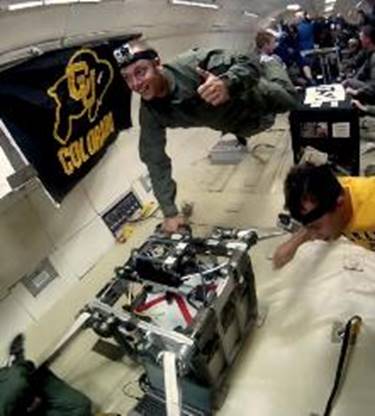
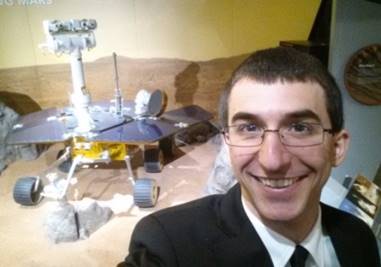
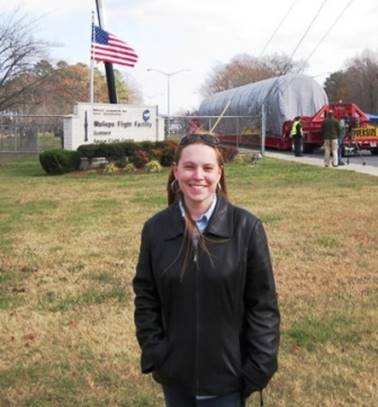
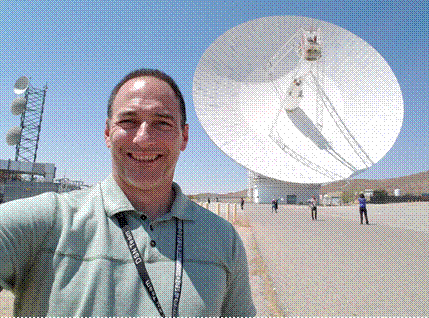
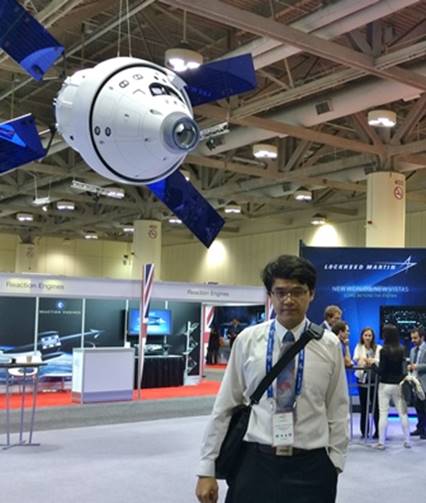
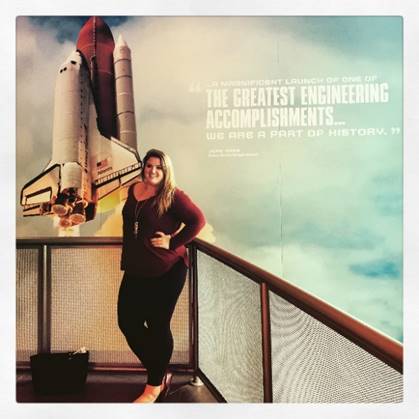
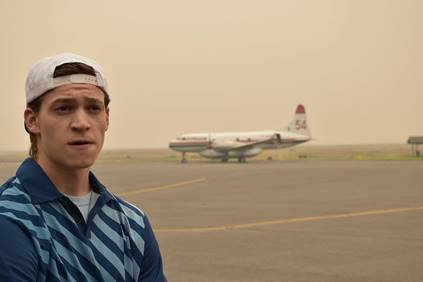
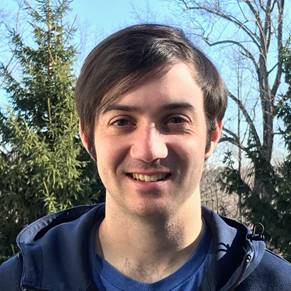
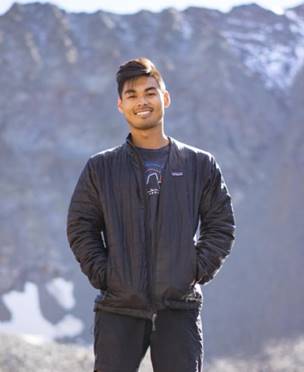
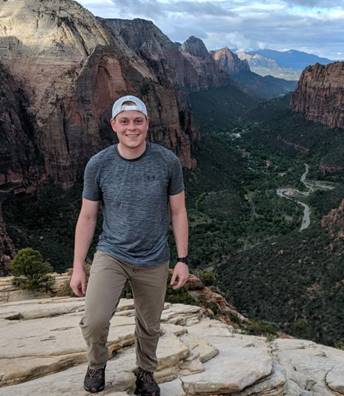
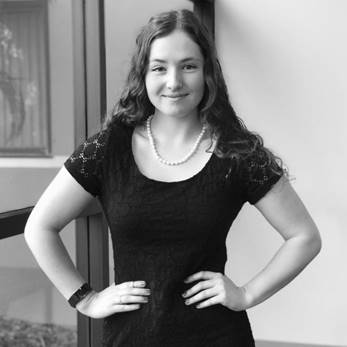
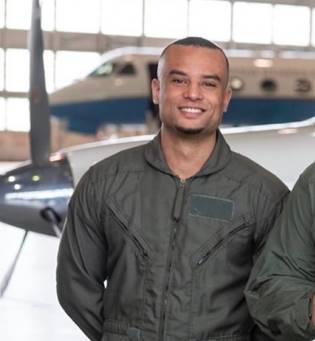
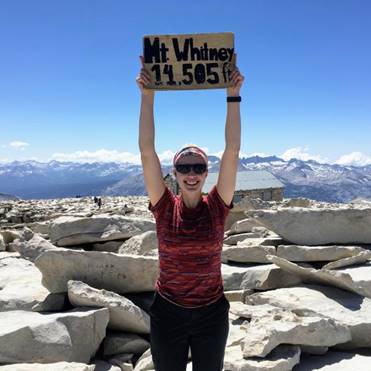
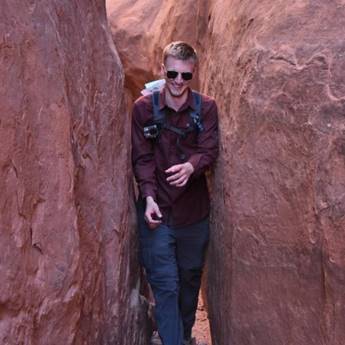
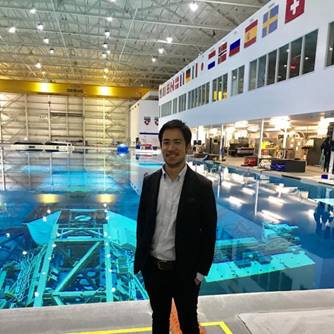
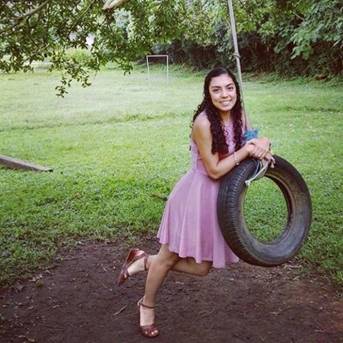
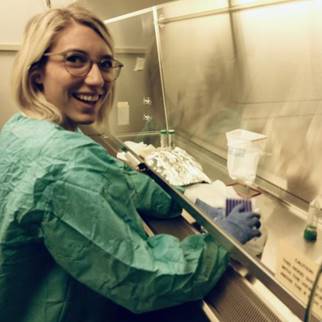
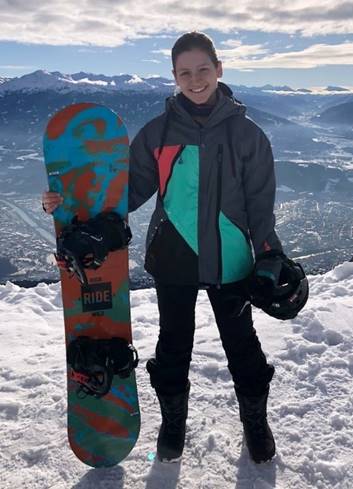
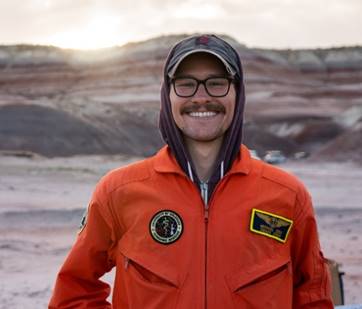
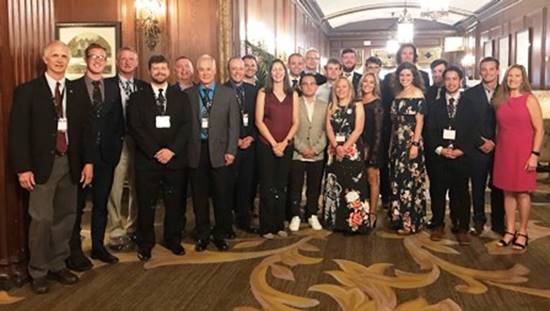
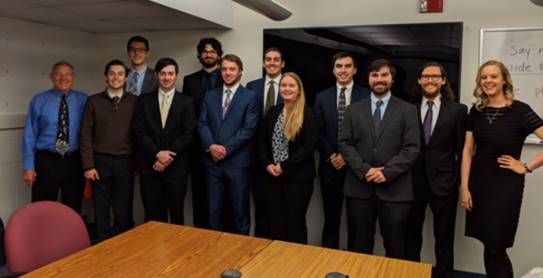
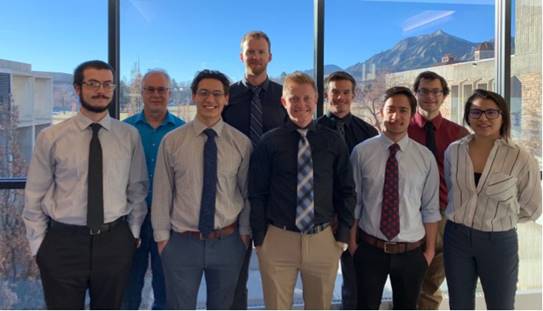
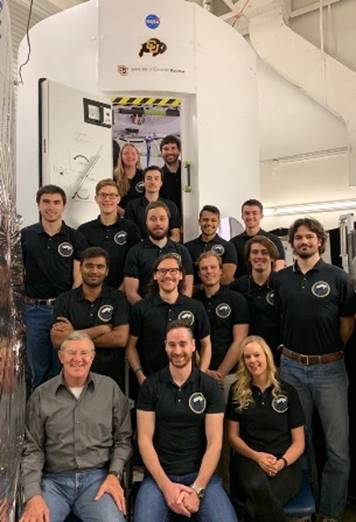
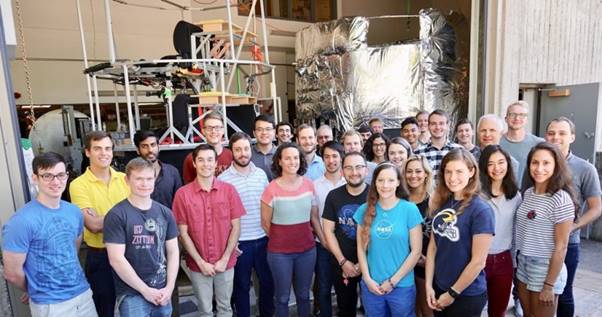
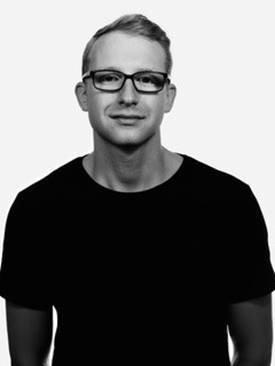
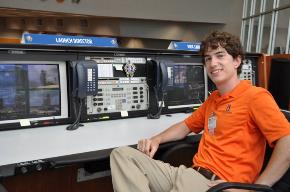
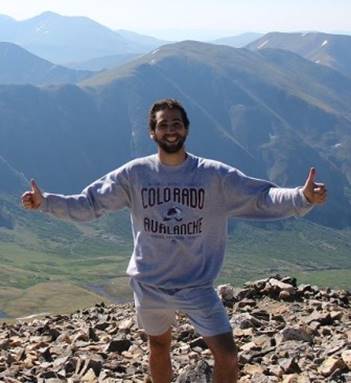
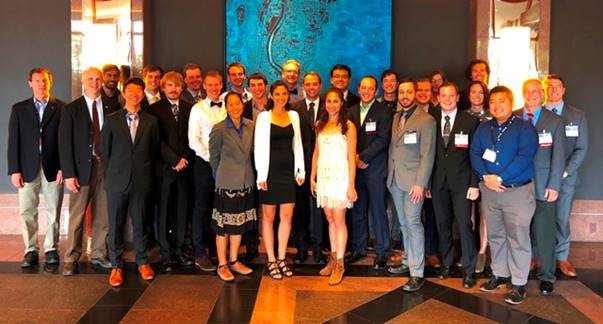
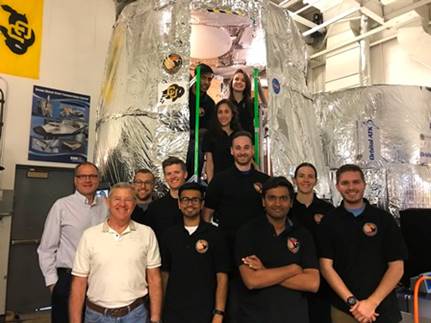
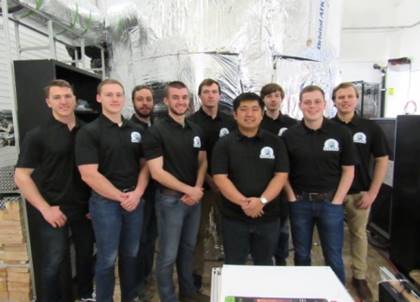
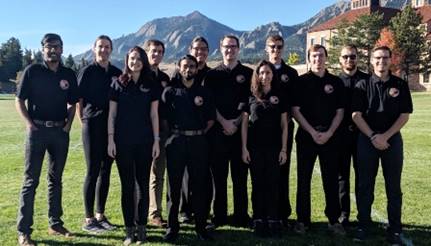
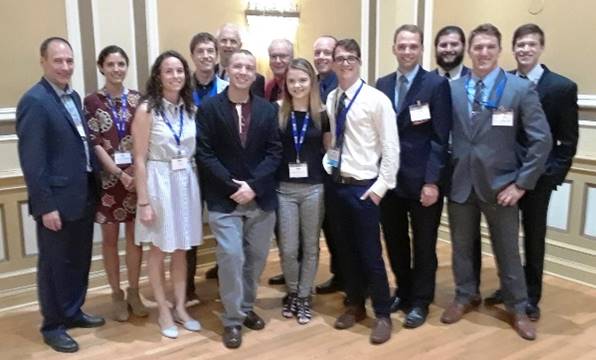
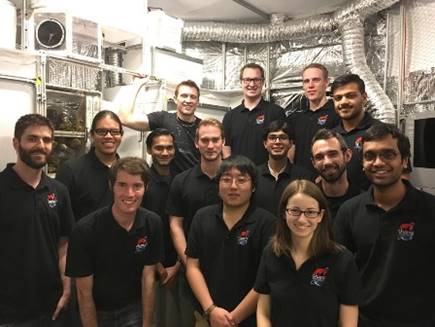
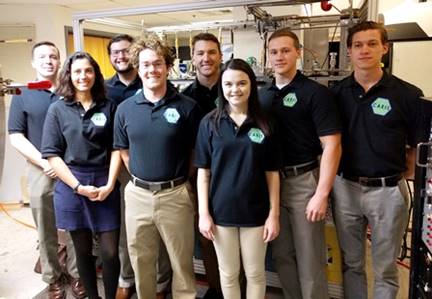
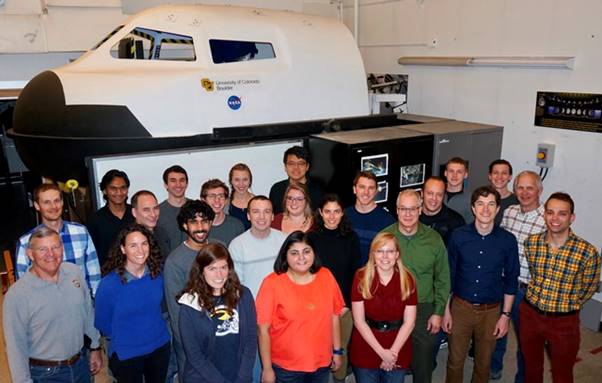
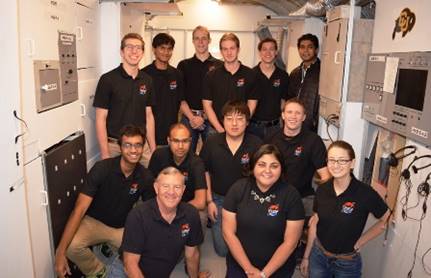
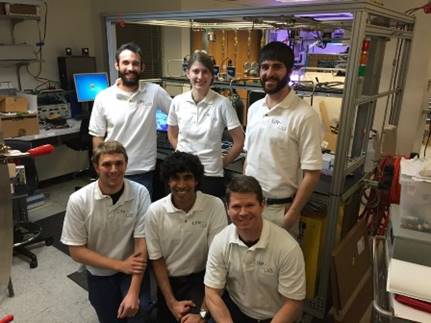
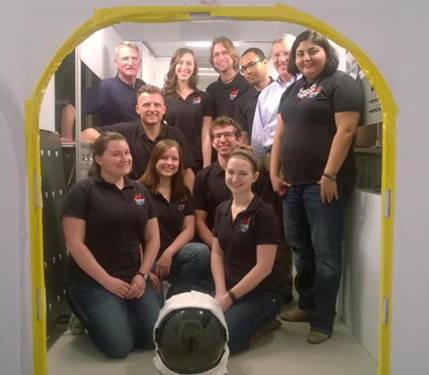
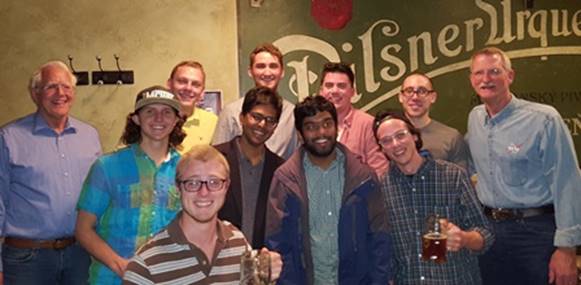
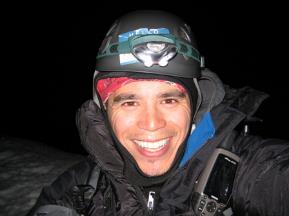
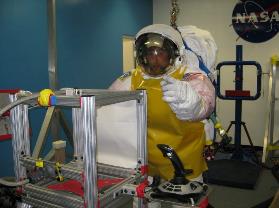
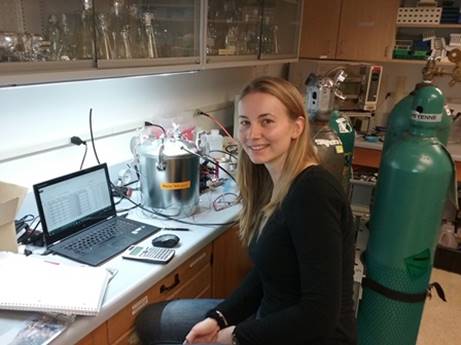
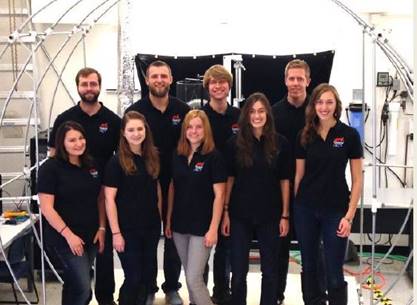
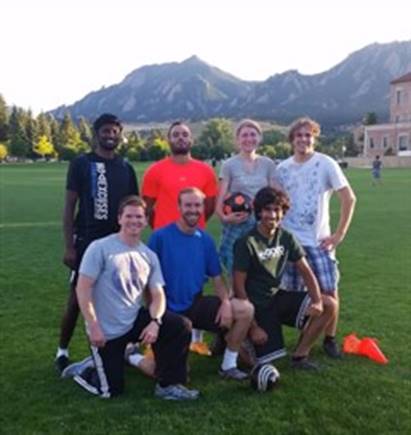
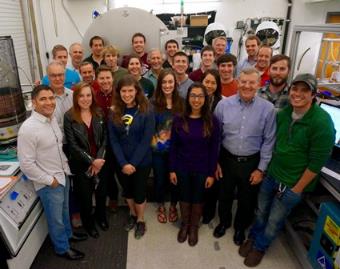
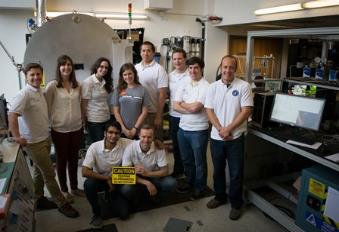
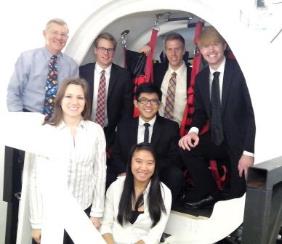
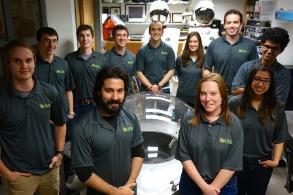
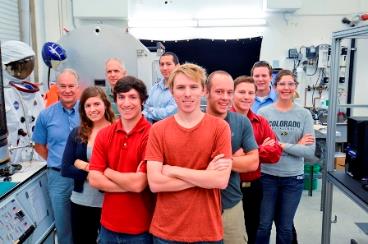
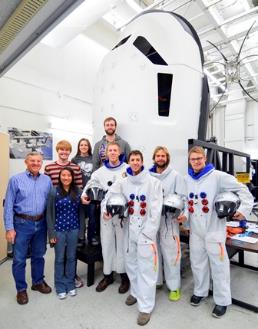
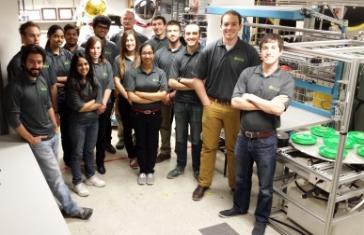
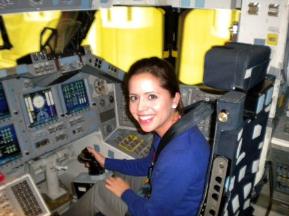
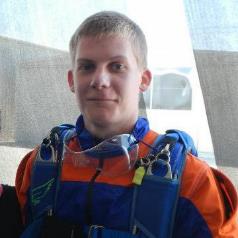
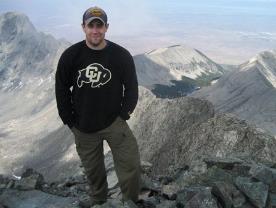
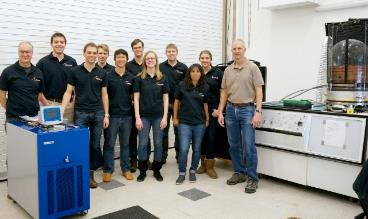
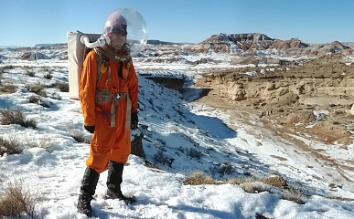
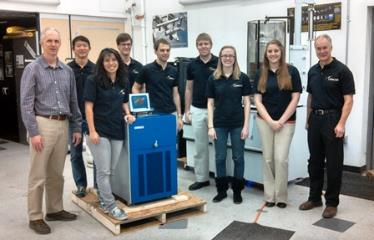
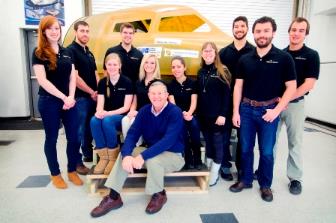
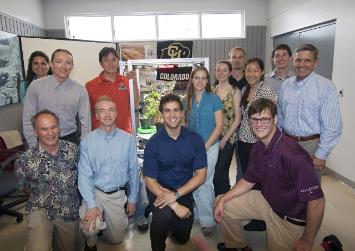
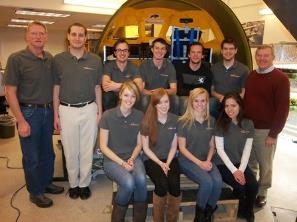
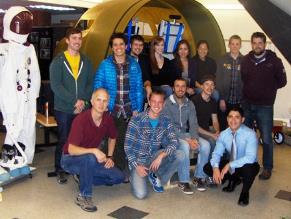
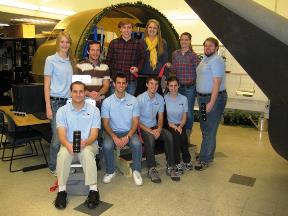
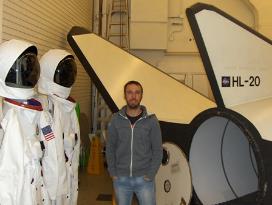
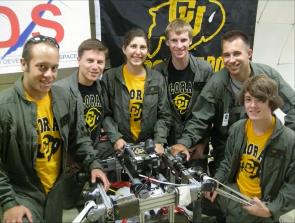
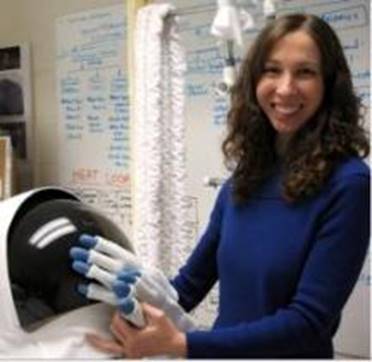
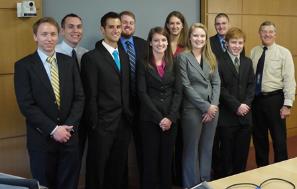
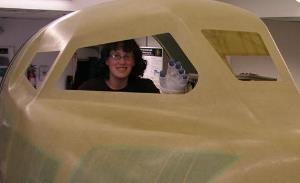
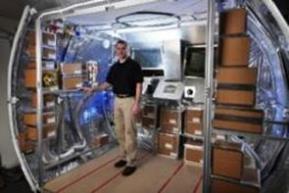
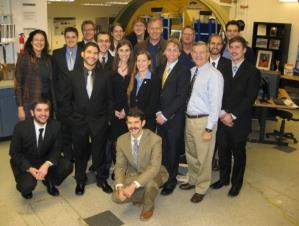
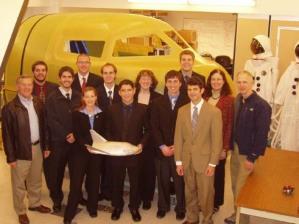
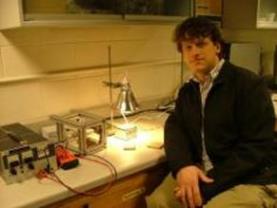
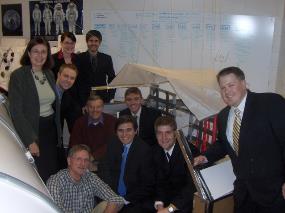
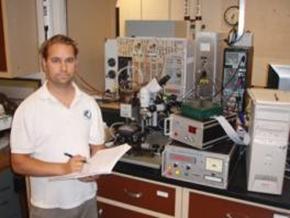
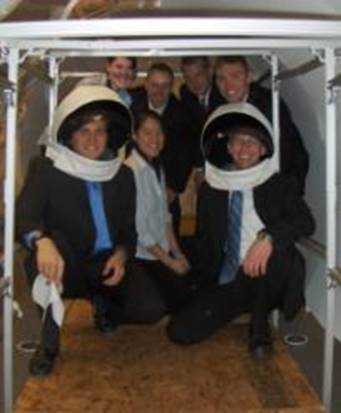
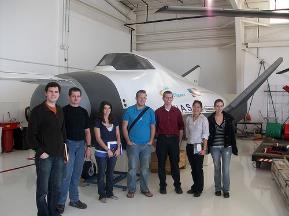
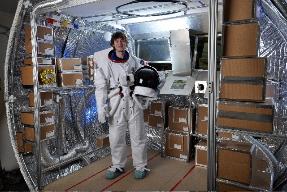
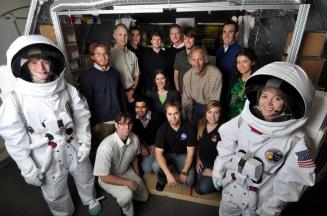
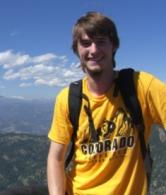
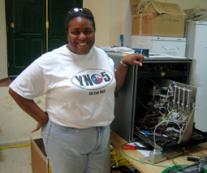
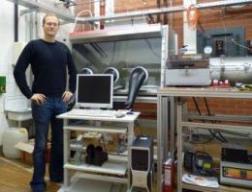
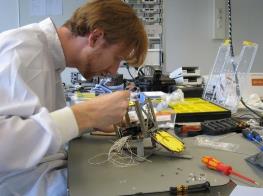
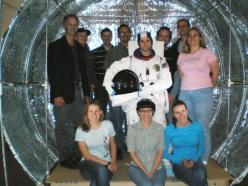
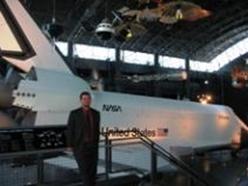
Return to home
page for David Klaus
Return to Bioastronautics
Homepage